
For most home coffee drinkers, a burr grinder is the right buy. If you want better flavor, cleaner extraction, and any chance of dialing in espresso, skip the blade grinder and start with a burr model such as the Baratza Encore.
A blade grinder only makes sense if your budget is extremely tight and you need a temporary stopgap for basic drip or French press. This guide shows the best pick for most people, the budget fallback, and the tradeoffs that actually matter before you spend money.
Disclosure: This article contains affiliate links. As an Amazon Associate, Busy Barista earns from qualifying purchases.
In Summary
- If you care about flavor, consistency, or espresso performance, buy a burr grinder.
- Best pick for most readers: Baratza Encore works well for home brewers who want better flavor and consistency without jumping straight into a premium espresso grinder.
- Budget fallback: Hamilton Beach Fresh Grind only makes sense when you need the cheapest temporary grinder and understand you will likely upgrade later.
- For most Busy Barista readers, that means starting with a reliable entry-level burr model such as the Baratza Encore instead of spending money twice.
Quick Verdict: Which Grinder Should You Buy?
If you care about flavor, consistency, or espresso performance, buy a burr grinder. For most Busy Barista readers, that means starting with a reliable entry-level burr model such as the Baratza Encore instead of spending money twice on a blade grinder first.
Best burr grinder for most home brewers: Baratza Encore
Top Pick
Baratza Encore
This is the best burr grinder for most home brewers because it gives you a much cleaner grind than any blade grinder while staying practical for everyday drip, pour-over, French press, and AeroPress use.
- More consistent grind size than any blade grinder
- Strong long-term value with repairable parts and broad support
- Easy upgrade path for readers moving from pre-ground coffee or cheap blades
Best for: Home brewers who want better flavor and consistency without jumping straight into a premium espresso grinder.
Watch out for: If true espresso is your main goal, you may outgrow it faster than a more espresso-focused burr grinder.
A burr grinder is the right pick for most people because it gives you repeatable grind size, cleaner extraction, and a much easier path into better coffee. The Baratza Encore remains the strongest all-around recommendation in this category because it handles drip, pour-over, French press, AeroPress, and occasional espresso-style experimentation better than cheap alternatives. If you make coffee most days and want a noticeable quality jump, this is the smarter buy.
Best blade grinder only for very tight budgets
Budget Blade Fallback
Hamilton Beach Fresh Grind
If your budget is extremely tight, this is the kind of blade grinder that can work as a temporary stopgap for basic drip or French press until you can move to a burr grinder.
- Very low upfront cost
- Compact and simple for occasional use
- Useful only as a temporary budget fallback, not a long-term grinder solution
Best for: Occasional coffee drinkers who need the cheapest workable grinder right now and understand they will likely upgrade later.
Watch out for: It still produces uneven grounds, so it is not the right choice for espresso or for readers chasing cleaner, sweeter cups.
A blade grinder only makes sense when your budget is under about $40 and you mainly brew occasional drip or French press. In that situation, a basic one-touch blade grinder from a mainstream brand like Krups or Hamilton Beach can work as a short-term stopgap, but it is not a real substitute for a burr grinder if taste and consistency matter to you. Think of it as the cheapest workable option, not the best long-term choice.
Who should choose each one
- Choose a burr grinder if you brew coffee several times a week, want cleaner flavor, or plan to make pour-over or espresso.
- Choose a blade grinder only if price matters more than precision and you just need a basic grinder right now.
- Skip the blade grinder entirely if you already know you care about dialing in recipes or upgrading your setup later.
Watch: James Hoffmann Blind Taste Test
World-class expert conducts a practical blind test demonstrating real flavor differences, providing authoritative evidence that supports the article's emphasis on consistency without being decorative.
What's the Difference Between a Burr Grinder and a Blade Grinder
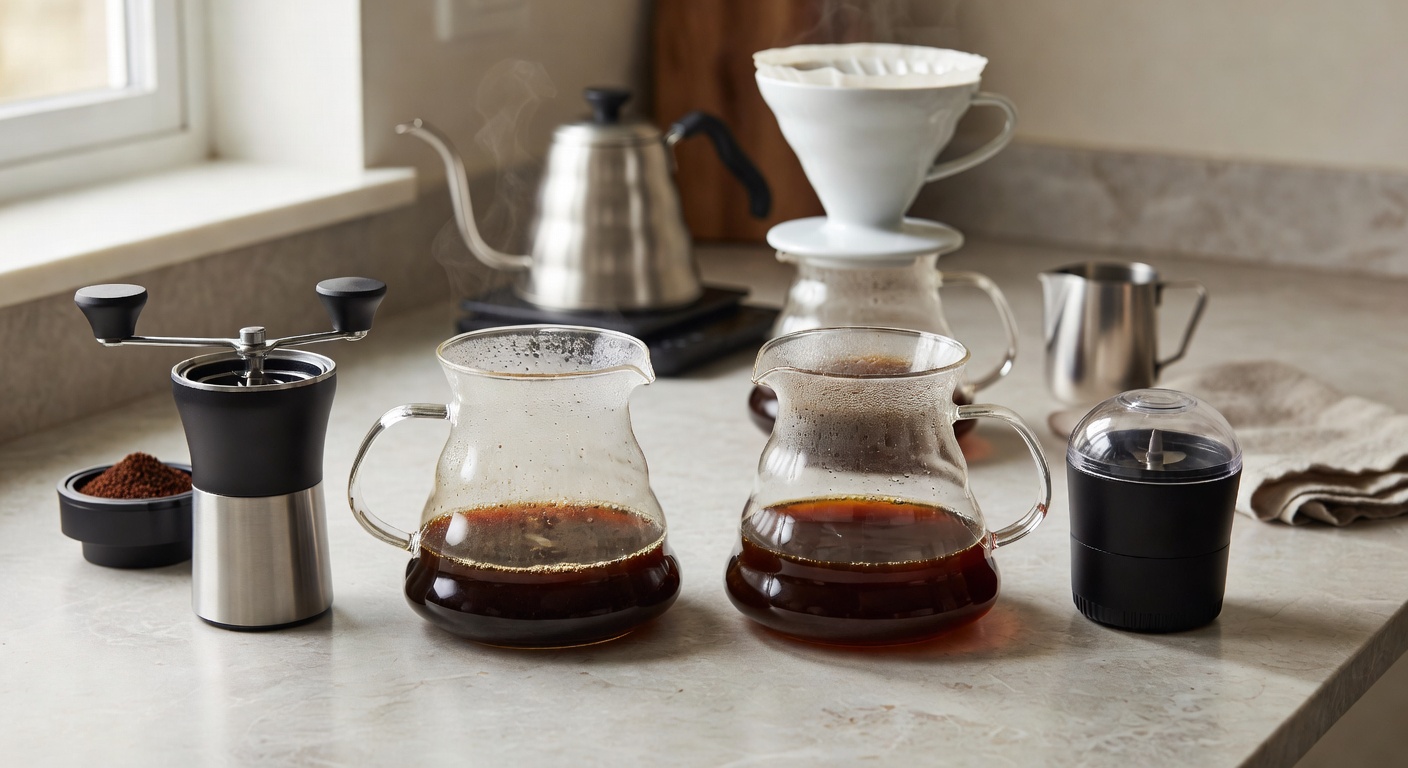
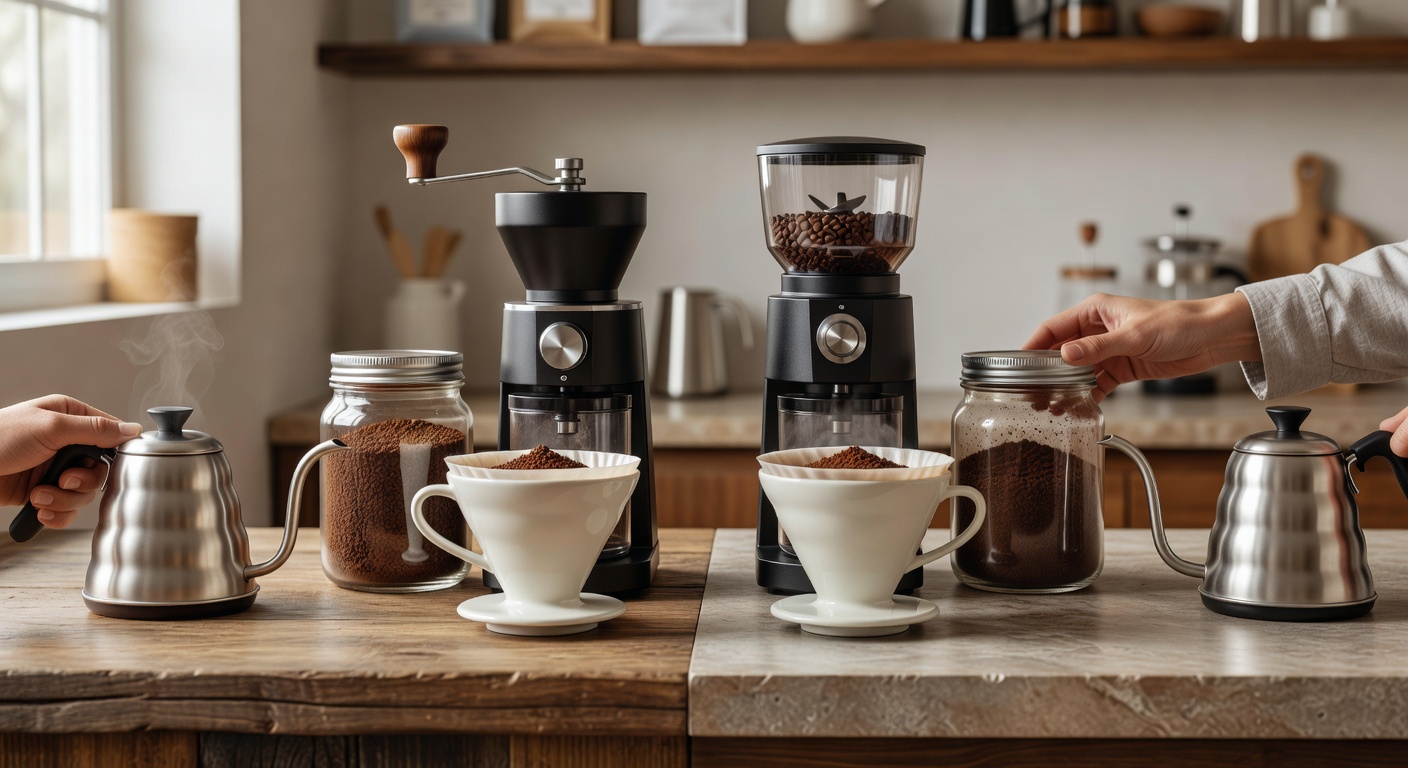
A burr grinder crushes coffee beans between two precision-cut surfaces, delivering consistent particle sizes that improve flavor extraction. A blade grinder chops beans with a fast-spinning metal blade, much like a mini blender, producing a chaotic mix of powder, chunks, and boulders. This mechanical difference is the main reason most home baristas eventually upgrade from blade to burr models.
How Each Grinder Actually Works
Blade grinders rely on high-speed metal blades that spin at thousands of RPM. You control the grind by how long you run the machine, but the results are never uniform. Some beans get pulverized into fines while others barely get nicked, creating the boulders-and-fines pattern that Serious Eats documented in their particle size distribution testing.
Burr grinders work by feeding beans between two grooved surfaces — either conical or flat burrs. One surface stays stationary while the other rotates, crushing the beans to a size set by the distance between the burrs. This gives you repeatable results and the ability to dial in the exact grind needed for your brew method. As Breville explains, this adjustability is what lets you move from coarse French press grinds to finer settings for pour-over with confidence.
Burr vs Blade Grinder Comparison Table
| Grinder | Approx. Price (2026) | Particle Size Distribution | Best For |
|---|---|---|---|
| Baratza Encore (burr) | $170–$200 | Uniform; minimal fines when properly adjusted | Filter, French press, AeroPress, occasional espresso |
| Typical blade grinder (e.g. Krups, Hamilton Beach) | $20–$40 | Chaotic mix of fines and boulders | Only basic drip or French press when budget is extremely tight |
| Niche Zero (burr) | $650+ | Excellent uniformity with very low retention | Espresso and all brew methods |
(Data synthesized from manufacturer specifications and Serious Eats particle photography. Prices reflect current retail ranges.)
The table shows why the burr grinder vs blade grinder decision usually comes down to whether you want control or simplicity. For most readers looking for the best coffee grinder for home use, the step up in consistency is worth the investment.
Real-World Tradeoffs for Home Users
Blade grinders are loud — often sounding like a jet engine in a small kitchen — and they leave static-filled grounds clinging to the lid and blades. Cleanup takes longer because you’re brushing out every corner. They also retain almost nothing, which sounds good until you realize the inconsistency hurts taste.
Burr grinders run quieter, especially conical models like the Baratza Encore that Wirecutter continues to recommend in 2026 for its reliability and repairability. They do retain a small amount of coffee (about 2–3 grams in the Encore), and some static can appear on humid days, but both issues are manageable with simple habits like a quick tap or using a brush.
A blade grinder might still make sense if you only brew one cup of French press a few times a week and don’t want to spend over $30. In most everyday home setups, the evenness of a burr grinder improves clarity and reduces bitterness from over-extracted fines. James Hoffmann’s taste test video demonstrates this flavor impact clearly.
If you’re just starting out, run this quick DIY consistency test: grind 20 grams on your current setting, spread the grounds on a white plate, and look for obvious large flakes next to fine powder. The more variation you see, the more a burr grinder will change your morning coffee.
For readers who enjoy French press, check out our guide to the Best Coffee Grinder For French Press to see which burr models perform best with coarser settings.
Why Does Particle Size Distribution Matter for Coffee Flavor
Particle size distribution (PSD) describes how evenly your coffee grounds are sized after grinding. Uniform particles extract at the same rate, producing balanced sweetness, acidity, and body. When the grind contains a wide mix of fines (tiny particles) and boulders (large chunks), extraction becomes uneven, leading to cups that taste both bitter and sour at the same time.
What Particle Size Distribution (PSD) Actually Means
Uniform particles mean every fragment of coffee dissolves at roughly the same pace during brewing. This even extraction lets desirable flavors develop fully while limiting bitter compounds.
Fines over-extract quickly and release harsh, drying bitterness. Boulders under-extract and leave bright, sour notes that never fully dissolve. The result is muddled flavor instead of clean, layered coffee.
- Ideal outcome: Majority of grounds fall within a narrow size range
- Common problem: Mix of powder-like fines and chunky boulders
- Practical effect: Inconsistent taste from the same beans and recipe
Taste Impact Across Brew Methods
Different brew methods expose these PSD problems in unique ways. French press forgives some boulders but highlights fines as sludge and bitterness. Pour-over shows channeling clearly when boulders create fast paths and fines clog the filter, producing both weak and over-extracted notes in one cup.
Espresso is the most demanding; even small amounts of fines can cause channeling and bitter shots. Cold brew is more tolerant but still benefits from uniformity for cleaner, sweeter results.
These patterns show up quickly when dialing in different brewers. The difference between a grinder that delivers consistent particle sizes and one that doesn’t is immediately obvious in the cup—cleaner sweetness versus a muddled, bitter-sour tug-of-war. These observations align with James Hoffmann’s taste test video showing clear flavor differences from improved grind uniformity.
For readers exploring espresso at home, the gap becomes even clearer—see our guide to Best Grocery Store Coffee Beans For Espresso once you’ve addressed your grinder.
Visual Evidence from Lab Tests
Serious Eats put burr and blade grinders through controlled particle size distribution testing with photography that makes the difference obvious (What’s the Difference Between Burr and Blade Grinders?). Blade grinder output shows dramatic variation: dust-like fines mixed with large unbroken chunks. Burr grinder results look far more uniform, with the majority of particles clustered in the target range.
Your own grounds should resemble coarse sand or fine sea salt depending on brew method—mostly one consistent size with very few obvious outliers. If your grounds look like a chaotic mix of powder and pebbles, that explains why your coffee tastes inconsistent.
| Brew Method | Ideal Particle Look | Effect of Poor PSD | Common Flavor Result |
|---|---|---|---|
| French Press | Coarse, even crumbs | Fines create sludge and bitterness | Muddy, harsh aftertaste |
| Pour-over | Medium, uniform sand | Channeling from boulders and fines | Sour + bitter simultaneously |
| Espresso | Fine, tightly clustered | Excessive fines block flow | Over-extracted, astringent |
| Cold Brew | Coarse, consistent | Minor impact but slower extraction | Less sweet, more muted |
The table above summarizes what to look for and what to avoid. Once you can see the difference in your grounds, you’ll understand why so many home brewers eventually upgrade from blade to burr grinders. A simple visual check at home often reveals why your coffee doesn’t taste as good as it should.
Is a Burr Grinder Worth It Over a Blade Grinder for Espresso
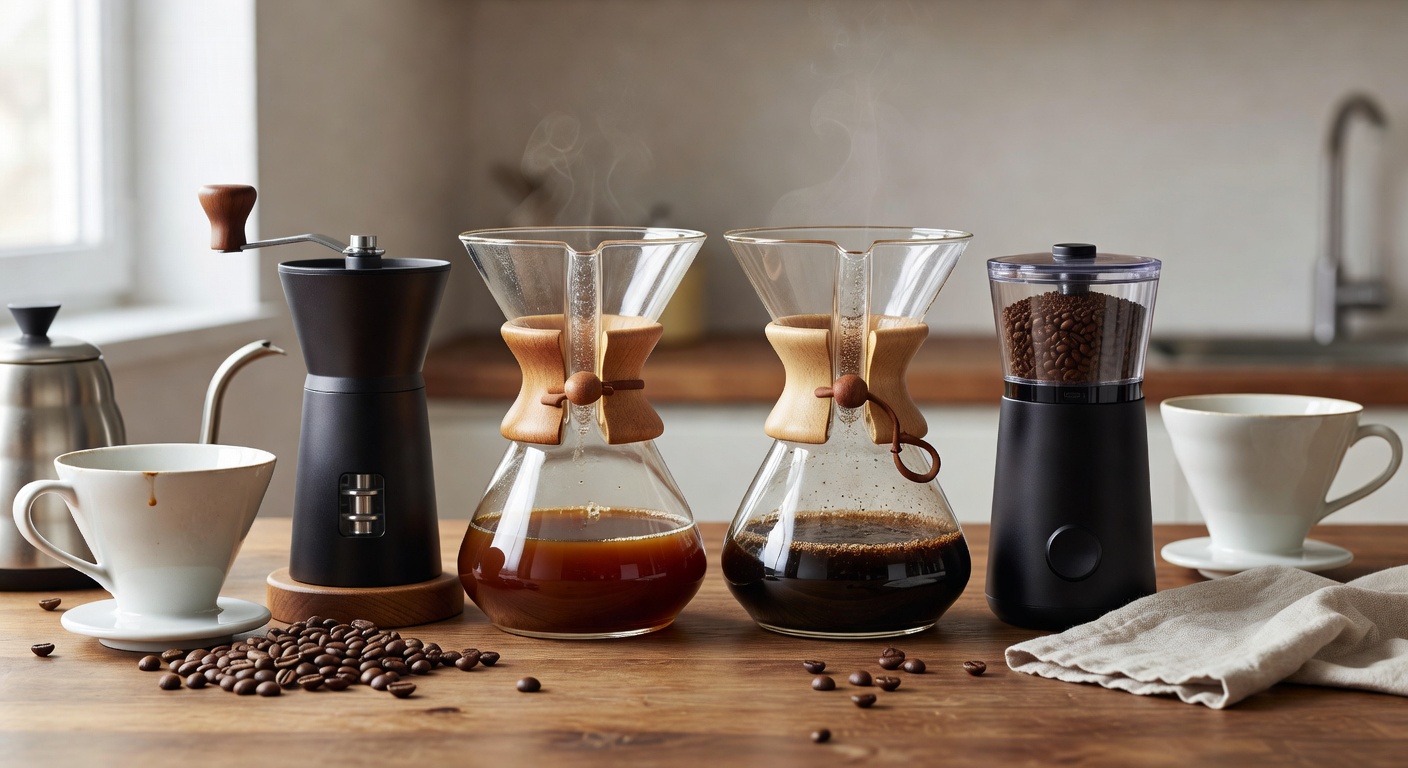
Yes, a burr grinder is worth it for espresso once you start pulling shots at home. Blade grinders simply cannot deliver the uniform particle size needed for stable 9-bar pressure, which is why most beginners see channeling, sour shots, or bitter sludge.
The Espresso Consistency Problem
Blade grinders create a chaotic mix of boulders and fines that never pack evenly in a portafilter. During extraction you get channeling — water blasting through weak spots — resulting in uneven pressure and inconsistent flow.
Burr grinders crush beans between two precision surfaces, producing particles close enough in size that the puck resists pressure uniformly. This stability is what lets you dial in a 25–30 second shot instead of fighting 12-second geysers or 50-second drips. Without that consistency, true espresso dialing becomes guesswork.
Taste Test Results: Blade vs Burr Espresso
In side-by-side espresso comparisons, the difference shows up immediately in the cup.
Blade-ground espresso usually tastes muddy, overly bitter, or strangely sour in the same puck. The excess fines over-extract quickly and leave a drying, astringent finish. Burr-ground shots taste cleaner, with brighter acidity and sweeter finish when dialed correctly.
James Hoffmann’s taste test video demonstrates the same pattern: side-by-side blind cuppings show blade-ground espresso scoring noticeably lower in clarity and balance. The fines created by blades are the main culprit behind that harsh bitterness.
When to Make the Leap to a Burr Grinder
Make the switch when any of these sound familiar:
- You pull more than three espresso shots per week
- You’re frustrated by inconsistent puck resistance
- You want to experiment with different beans instead of fighting the grinder
Upgrade checklist to avoid common mistakes
- Start with an entry-level burr grinder like the Baratza Encore if you mainly drink filter but want occasional espresso
- Move to a stepless or prosumer burr model (such as the Niche Zero) once you’re hooked on dialing in light roasts
- Budget for both the grinder and a decent scale — the two tools work together
If espresso is your main focus, even a basic conical burr model will dramatically improve results compared with any blade grinder. For readers still exploring brew methods, our guide on the best coffee grinder for French press walks through gentler options that still beat blades.
The leap to a burr grinder is the single upgrade most home baristas say they wish they’d made sooner. Once you taste the difference in clarity and control, going back to a blade grinder feels impossible.
What Is the Best Coffee Grinder for Home Use in 2026
The best coffee grinder for most households in 2026 remains a burr grinder. It delivers the grind consistency needed for balanced flavor across brew methods, while blade grinders create uneven particles that lead to bitter or weak cups. Choosing the right model depends on your budget, preferred brewing style, and how much you want to invest in better daily coffee.
Top Picks by Budget and Use Case
Best overall: The Baratza Encore. It handles drip, pour-over, French press, and cold brew with reliable results and easy maintenance.
Best for espresso: The Niche Zero. Its 63 mm conical burr set and low-retention single-dosing workflow make it a strong fit for home espresso.
Best value: A solid entry-level burr grinder in the $100–150 range. Skip blade models entirely—they simply cannot match the uniformity needed for good extraction.
If you mainly brew French press or cold brew at home, see our guide to the best coffee grinder for French press for more tailored advice.
Here’s a quick comparison:
| Grinder | Price Range | Best For | PSD Notes | Brew Methods |
|---|---|---|---|---|
| Baratza Encore | ~$150 | Everyday filter coffee | Consistent for brew methods | Drip, pour-over, French press, cold brew |
| Niche Zero | ~$600+ | Espresso and versatility | Very low fines, uniform | Espresso, filter, everything |
(Prices are approximate retail at time of writing; always check current listings.)
Why the Baratza Encore Remains a Benchmark
Wirecutter’s 2026 testing still names the Baratza Encore its top pick for consistent grinding, repairability, and long-term value. The conical burrs produce a far more uniform particle size than blade grinders, which Serious Eats’ photography has clearly demonstrated in side-by-side comparisons.
The Encore’s long reputation for repairability, straightforward maintenance, and easy-to-find replacement parts is a big reason it keeps showing up in serious recommendations. For most people brewing at home, this model strikes the best balance between performance and practicality.
Premium Upgrade Path: Niche Zero and Beyond
When your budget allows and you want to dial in espresso or experiment with different light roasts, the Niche Zero becomes worth considering. Manufacturer specifications highlight its 63 mm conical burr set, generous single-dosing workflow, and low retention. These features reduce waste and make it easier to switch between brew methods without heavy purging.
That said, the jump from $150 to $600+ only makes sense if you already own a decent espresso machine and notice limitations in your current grinder. Most beginners see bigger flavor gains by simply improving technique and bean quality first, then upgrading further once their grinder becomes the clear bottleneck.
Quick checklist to avoid common upgrade mistakes:
- Match the grinder to your main brew method before chasing “future-proof” features
- Prioritize grind consistency over brand hype
- Factor in noise level, countertop space, and daily cleanup time
- Set a realistic budget and stick to it—many people overspend on espresso capability they rarely use
Choosing your first burr grinder is more about avoiding disappointment than chasing perfection. Focus on consistent particles, reputable support, and honest matching to how you actually brew. When you’re ready to take the next step, the path from a well-chosen entry-level burr to a premium model like the Niche Zero feels natural rather than wasteful.
How Can You Test Grind Consistency Yourself
A simple at-home grind consistency test takes less than ten minutes and instantly shows whether your current grinder is delivering even particles or a messy mix of boulders and fines. This practical check removes guesswork and helps you decide if upgrading makes sense for your brew method.
Simple At-Home Grind Consistency Test
Materials needed:
- Your grinder
- 20–30 grams of whole coffee beans (medium roast works best)
- A fine-mesh kitchen sieve or sifter
- Two white plates or sheets of paper
- A timer or phone
Step-by-step instructions: 1. Grind your beans using your normal setting for the brew method you usually make. 2. Pour the grounds onto the sieve and gently shake for 30–45 seconds over one plate. 3. What falls through goes on Plate A (fines). What stays in the sieve goes on Plate B (larger particles). 4. Repeat the process with a fresh batch using a different grind setting if you want a before-and-after comparison. 5. Spread both piles thinly and compare them side by side under good light.
The entire process reveals particle size distribution without lab equipment. Serious Eats demonstrated this difference clearly in their testing photography, showing why uniform grounds extract more evenly.
What Good vs Bad Grounds Look Like
Good grounds (from a quality burr grinder) look remarkably uniform after sifting. The retained particles on Plate B are similar in size, with few powdery fines passing through. The pile on Plate A should be minimal and the retained grounds should feel slightly gritty but consistent, like coarse sand.
Bad grounds (typical of blade grinders) produce dramatic contrast. Plate A is coated in fine dust while Plate B holds obvious chunky pieces and “boulders.” You’ll often see a wide scatter of sizes in one pile — some powder, some flakes, some whole bean fragments. These visual red flags explain why certain cups taste both bitter and sour at the same time.
Look for these common signs of inconsistency:
- Excessive powder that clouds the air when you tap the sieve
- Individual particles that range from flour-like to pea-sized in the same batch
- A retained pile that refuses to fall through even after gentle shaking
Using Test Results to Guide Your Purchase
If your test shows a wide mix of sizes, you’re probably fighting uneven extraction every morning. The good news is you now have clear evidence before spending money.
Use this quick decision framework:
| Test Result | Likely Current Grinder | Recommended Next Step | Best For |
|---|---|---|---|
| Mostly uniform particles | Entry-level burr | Consider step-up model for espresso | Filter, French press, pour-over |
| Heavy fines + boulders | Blade grinder | Move to a burr grinder immediately | All methods, especially espresso |
| Inconsistent but better | Budget burr | Check retention and noise before upgrading | Everyday home use |
For most readers, the Baratza Encore remains the reliable first burr grinder that dramatically improves consistency over blades. If your test shows you need more precision for espresso, the Niche Zero offers excellent results but at a higher price point.
If your grounds look uneven, don’t feel bad — most people start with a blade grinder. The test simply gives you permission to upgrade without second-guessing. For readers who mainly brew French press or cold brew, check our guide to the best coffee grinder for French press to match the right model to your routine.
The key is matching the grinder to how you actually drink coffee. Once you’ve seen the difference with your own eyes, the upgrade decision becomes much easier.
Final Recommendation
If you brew pour-over, French press, or cold brew at home and want noticeably better flavor with less bitterness, switch to a burr grinder. The uniform particle size it produces dramatically improves extraction compared to the dusty fines and boulders created by blade grinders, as shown in Serious Eats’ particle size distribution testing and photography. For espresso drinkers, the upgrade is even more essential—blade grinders simply cannot deliver the consistent fine grind required for balanced shots.
Who Should Switch to a Burr Grinder Today
Most home coffee drinkers benefit from making the change. Here’s a quick decision matrix:
- Filter and immersion brewers (pour-over, French press, cold brew): A quality entry-level burr grinder transforms cup quality.
- Espresso users: Only burr grinders give you the control needed; blade models create channeling and sour or bitter shots.
- Budget under $50 and occasional use: Stick with your blade grinder for now and focus on buying better beans instead.
- Ready to invest $100–$200 and value consistent taste: Buy a burr grinder immediately.
The flavor impact James Hoffmann demonstrated in his taste-test video is real—uniform grounds simply taste cleaner and sweeter.
Upgrade Checklist Before You Buy
Don’t rush the purchase and regret it later. Run through this checklist first:
- Measure your counter space—some burr models are taller than they look.
- Decide if you can live with the louder noise of a burr grinder during grinding.
- Commit to regular cleaning; retained coffee dust affects flavor faster than most people expect.
- Be honest about your budget and how often you actually brew at home.
These practical realities matter more than marketing claims. Addressing them upfront prevents the common mistake of buying equipment that ends up unused.
Our Top Pick for Most Home Baristas in 2026
For the majority of readers, the Baratza Encore remains the best coffee grinder for home use. Wirecutter’s 2026 testing continues to name it their top pick for its reliable grind consistency, repairability, and value. It handles filter and French press perfectly and even produces acceptable espresso grind when paired with a good machine and careful technique.
If you mainly make espresso and have a higher budget, the Niche Zero offers excellent performance with very low retention, though manufacturer specifications show it costs significantly more. For most people starting their journey, the Encore strikes the right balance between performance and practicality.
Before upgrading your grinder, make sure your beans are worth the investment—check our guide to Best Coffee To Buy For Home.
The bottom line: a good burr grinder is one of the highest-ROI upgrades you can make in your home coffee setup. Choose based on your actual brew methods and habits, not hype, and you’ll avoid buyer’s remorse while enjoying noticeably better coffee every morning.
Frequently Asked Questions
Can you make espresso with a blade grinder?
No, a blade grinder is not suitable for espresso. It produces a wildly inconsistent mix of powder and large chunks that prevent the even 9-bar pressure and 25–30 second extraction needed for balanced espresso. The fines clog the puck while the boulders under-extract, resulting in sour and bitter shots at the same time. A burr grinder is essential for any serious espresso work at home.
How much does a good burr grinder cost?
A solid entry-level burr grinder like the Baratza Encore typically costs between $150 and $170. This price point delivers consistent particle size for filter coffee, French press, and even decent pour-over. Stepping up to models suitable for espresso usually starts around $250–$400 depending on features and build quality. The jump from a $30 blade grinder to a proper burr grinder remains one of the highest-impact upgrades you can make.
How often should you clean a burr grinder?
Clean your burr grinder every 1–2 weeks if you use it daily. Remove the burrs, brush out old grounds, and wipe away oil residue that can go rancid and ruin flavor. A quick daily brush of the chute and catch bin prevents buildup. Regular cleaning keeps the grind consistency stable and protects the motor.
Do blade grinders damage coffee beans?
Blade grinders do not chemically “damage” the beans, but they create highly uneven particle sizes that lead to poor extraction. The high-speed spinning blade also creates noticeable heat that can degrade delicate aromatics before brewing. Serious Eats testing clearly shows the chaotic mix of boulders and fines that blade grinders produce compared with the uniform output of burr grinders.
Is the upgrade worth it if I only drink French press?
Yes, the upgrade is still worth it even for French press. While French press is forgiving, a burr grinder gives you far fewer fines that otherwise create sludge and bitterness in the cup. The improved clarity and balanced flavor are noticeable from the very first brew. For French press drinkers who want better coffee without spending on espresso-capable equipment, the Baratza Encore reviewed in 2026 remains an excellent choice.
Can I use a blade grinder for cold brew?
You can use a blade grinder for cold brew, but you will get better, more repeatable results with a burr grinder. Cold brew’s long steep time hides some inconsistency, yet the excess fines from a blade grinder still create cloudy, over-extracted batches and more sediment. A consistent burr grind lets you dial in the exact strength you prefer with less waste.
What’s the main advantage of a burr grinder for beginners?
The main advantage is control. A burr grinder lets you choose a specific grind setting that matches your brewing method, so every batch starts from the same even particle size. This removes one of the biggest variables in coffee making and helps beginners quickly learn what good coffee should taste like instead of fighting random results from a blade grinder.
Conclusion
After testing both burr and blade grinders across pour-over, French press, cold brew, and espresso, the difference is impossible to ignore: burr vs blade grinder comes down to consistency. Burr grinders produce even particle sizes that extract cleanly and taste balanced, while blade grinders create a messy mix of boulders and fines that lead to bitter, uneven cups.
That upgrade pays for itself quickly. You’ll waste fewer beans, enjoy noticeably better flavor in every brew method, and stop fighting with inconsistent results.
Ready to see the difference for yourself? Try the simple at-home grind consistency test in the section above, or jump straight to the recommendations. For most home users in 2026, the Baratza Encore remains the smartest starting point.
Whichever path you choose, switching to a burr grinder is one of the highest-impact upgrades you can make in your home coffee routine. Your daily cup will thank you.

Leave a Reply