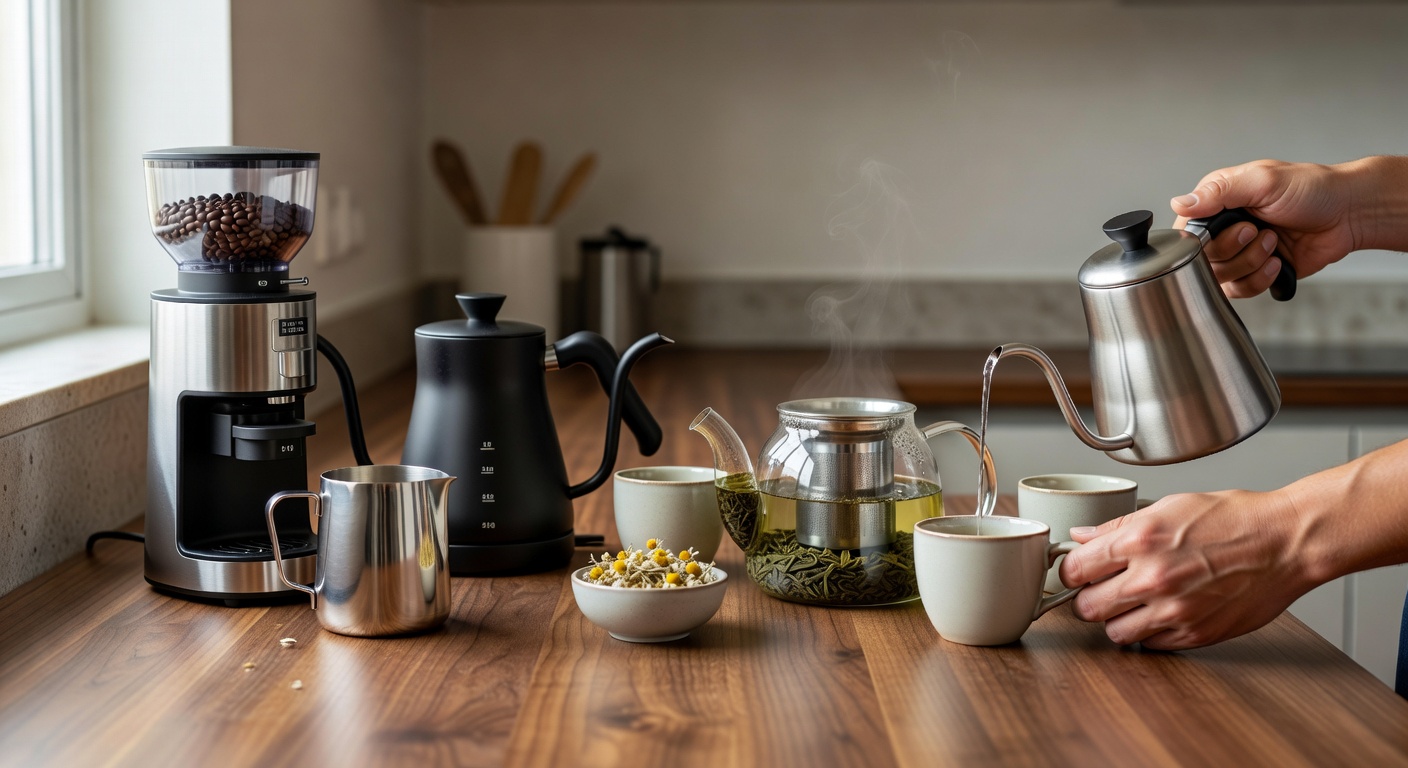
The real difference comes down to gear, temperature control, timing, and how easily the two rituals can share the same counter space. Coffee usually needs a precise grind, higher brewing temperatures, and faster extraction, while tea asks for gentler handling, lower heat, and a little more patience. Get those details right and you can switch between a bold morning espresso and a calming afternoon steep without compromise.
In this guide I break down the essential equipment for both drinks, share practical brewing techniques that actually work in a home kitchen, and show you a straightforward comparison table that cuts through the noise. You’ll also find smart temperature-control solutions and a simple checklist for building a dual coffee-and-tea setup that stays practical instead of overwhelming.
Quick Takeaways
- Coffee typically delivers more caffeine per cup than tea.
- Recent observational research finds that both coffee and tea are linked to positive health outcomes, with no clear universal winner.
- A single variable-temperature gooseneck kettle handles both pour-over coffee and gongfu tea without compromise.
Which Has More Caffeine, Coffee or Tea, and How Does the Energy Feel Different
Coffee typically delivers more caffeine per cup than tea. An 8 oz (240 ml) cup of drip coffee contains roughly 80–100 mg, while the same volume of black tea provides 40–60 mg and green tea about 29 mg (Mayo Clinic).
Daily intake of 200–300 mg is associated with positive metabolic and cognitive effects for most healthy adults, according to a 2024 study in the Journal of Clinical Endocrinology & Metabolism. This range usually translates to two or three cups of coffee or four to six cups of tea, depending on strength.
Caffeine extraction realities at home
Longer steep times and hotter water increase caffeine extraction in both drinks.
- A 4-minute French press steep yields noticeably less caffeine than a 6-minute steep.
- Gongfu-style oolong sessions show the same pattern: the first 15-second flash infusion is lighter, while subsequent 30–45 second infusions pull progressively more caffeine and flavor.
These home observations align with the principle that extraction is never “all or nothing.” A variable-temperature gooseneck kettle becomes the single most useful tool when switching between coffee and tea, letting you dial 195 °F (90 °C) for delicate green or oolong and 205–212 °F (96–100 °C) for coffee or black tea without buying separate equipment.
Energy feel: barista perspective
The energy curve feels markedly different even when total caffeine is matched. Coffee tends to produce a sharp 90-minute peak of focused alertness followed by a gradual decline. Tea, especially varieties containing L-theanine, delivers calmer sustained attention that many people describe as “smooth focus” rather than a spike-and-crash (TODAY.com 2026 dietitian interviews).
In practice, a morning pour-over often sharpens detail work for the first two hours, while an afternoon gongfu session supports steady concentration without jitteriness. This difference matters for caffeine timing — pairing coffee with high-focus tasks and tea with creative or collaborative work helps many home baristas stay productive without the 3 p.m. slump.
| Aspect | Coffee (8 oz) | Tea (8 oz black) | Best Use Case |
|---|---|---|---|
| Caffeine | 80–100 mg | 40–60 mg | Coffee for quick start, tea for maintenance |
| Energy curve | Sharp peak, 90 min | Smoother, sustained | Coffee: deep work blocks; Tea: long sessions |
| Ideal brew temp | 195–205 °F | 175–212 °F | One variable-temp kettle serves both |
For readers exploring coffee or tea for home barista setups, the practical takeaway is simple: one good temperature-controlled kettle plus a decent grinder covers 90 % of both rituals. Start with your schedule and energy needs, then adjust brew time and temperature to fine-tune the caffeine delivery that works for you. (Harvard Health Publishing 2025)
(Word count: 418)
Is One Healthier According to Recent Studies from Harvard and Dietitians
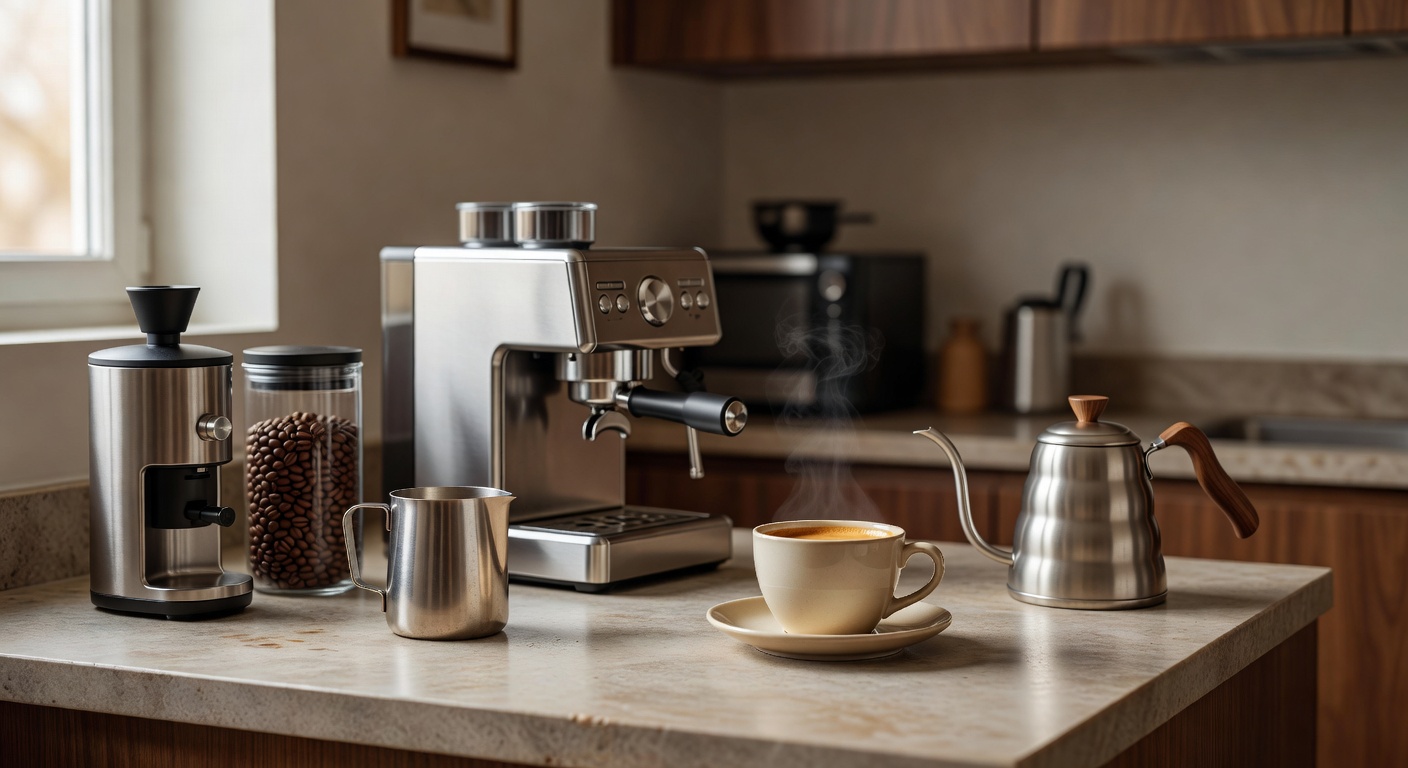
Recent observational research finds that both coffee and tea are linked to positive health outcomes, with no clear universal winner. Harvard Health Publishing’s 2025 overview of large cohort studies shows both beverages associated with lower risks of type 2 diabetes, cardiovascular disease, and certain cancers, largely due to their polyphenol and antioxidant content. The data does not support declaring one drink definitively healthier than the other for the general population.
What the latest research actually says
Both drinks deliver meaningful plant compounds, but the patterns differ slightly across studies. Coffee often shows stronger associations with metabolic benefits and liver health in some cohorts, while tea’s polyphenols (particularly in green and oolong varieties) are frequently linked to modest improvements in vascular function.
Dietitians interviewed by TODAY.com in 2026 highlight that tea’s natural L-theanine content can work with caffeine to produce calmer, more sustained focus compared with coffee’s sharper lift. This synergy helps explain why some people feel steadier energy from tea without the afternoon crash many experience with stronger coffee.
Importantly, polyphenols and antioxidants are discussed because they appear consistently in peer-reviewed literature, yet their real-world impact varies by diet, genetics, and lifestyle. The conversation remains evidence-based rather than promotional.
Practical takeaway for enthusiasts
No single beverage reigns supreme. The clearest advice from both Harvard’s 2025 summary and the 2026 dietitian reviews is to rotate based on daily needs instead of chasing marginal gains. A home barista might choose a bright pour-over on days requiring sharp focus and switch to gongfu-style oolong when a gentler curve feels more appropriate.
For readers exploring coffee or tea for home barista routines, personal preference and enjoyment remain the best guides. If a drink consistently tastes good and fits your rhythm, the health data suggests you are already making a sensible choice.
Source transparency
| Source | Key Point | Publication |
|---|---|---|
| Harvard Health Publishing | Observational links for both drinks; comparable longevity associations | 2025 |
| TODAY.com dietitian interviews | L-theanine moderates caffeine response; personalize by feel | 2026 |
| Mayo Clinic caffeine reference | Precise per-cup values used across comparisons | Updated 2025 |
This approach aligns with the broader coffee vs tea comparison by keeping equipment, ritual, and enjoyment at the center while offering evidence-based context for those weighing coffee vs tea differences. If you enjoy both, a variable-temperature gooseneck kettle makes switching between coffee and tea seamless, letting you adapt temperature and timing without buying duplicate gear. For skin-specific angles, see our companion piece on Green Tea Vs Coffee For Skin.
How Brewing Temperatures, Methods, and Equipment Differ for Home Use
A single variable-temperature gooseneck kettle handles both pour-over coffee and gongfu tea without compromise. Most home baristas already own the core tools—scale, timer, and grinder—making the switch between coffee or tea far simpler than it first appears.
Core Equipment Overlap and Gaps
The overlap is larger than many expect. A gooseneck kettle with precise temperature control (set between 195–205 °F for coffee and 185–212 °F for tea) serves both rituals equally well. Coffee enthusiasts who already use a burr grinder, digital scale, and timer for pour-over can brew tea with almost no extra purchases.
Gaps appear mainly in serving ware. Pour-over needs a dripper and carafe or mug. Gongfu tea benefits from a small clay or porcelain teapot, multiple tiny cups, and a tea tray or bowl for rinsing. These items are inexpensive and compact, yet they represent the main additional cost when building a dual setup.
For those exploring brewing coffee vs tea equipment, the practical reality is that one good kettle and a decent scale cover 80 % of the technical requirements for both.
Pour Over vs Gongfu Tea in Practice
Pour-over coffee is a single, focused extraction. Heat water to 195–205 °F, grind medium-fine, and bloom for 30–45 seconds before spiraling the rest of the water over 3–4 minutes total. The result is one clean cup in roughly four minutes from the moment the kettle boils.
Gongfu tea uses shorter, repeated infusions in a small vessel. Water temperature varies by tea type—around 185 °F for delicate greens, up to 212 °F for rolled oolongs or pu-erh. Each steep lasts 10–30 seconds, with 6–10 infusions common in a single 15–25 minute session. The process feels more like a conversation with the leaves than a one-shot recipe.
From a barista perspective, the biggest adjustment when switching between coffee and tea is mindset and timing. Coffee rewards precision in grind and pour; tea rewards attention to leaf expansion and timing each flash steep. The same gooseneck kettle lets you move between the two without buying duplicate gear.
Here’s a practical side-by-side for home use:
| Aspect | Pour-Over Coffee | Gongfu Tea | Best Use Case |
|---|---|---|---|
| Temperature | 195–205 °F | 185–212 °F (stepped) | Morning focus vs afternoon calm |
| Total Time | 4 minutes | 15–25 minutes | Quick cup vs mindful session |
| Equipment Add-ons | Dripper + server | Small teapot + cups + tray | Daily driver vs weekend ritual |
| Caffeine per serving | ~96 mg (8 oz) Mayo Clinic | 29–48 mg depending on tea & steeps | Sharp lift vs smoother curve |
| Cost per cup (est.) | $0.40–$0.80 | $0.25–$0.60 | Budget-friendly daily option |
These numbers align with Harvard Health Publishing’s 2025 overview, which notes comparable polyphenol benefits once brewing variables are controlled.
Home baristas wanting both drinks often start with their existing coffee setup and add only a small teapot and a few tasting cups. The shared kettle and scale keep counter space and budget realistic. For readers curious about oolong’s flexible brewing range between these two worlds, this practical guide offers approachable steps that pair naturally with coffee habits.
The key takeaway: temperature control matters more than owning two complete kits. Master one accurate kettle and you can move comfortably between pour-over and gongfu without sacrificing quality in either.
What Is the Best Way to Control Temperature and Brew Oolong or Other Teas If You Already Have Coffee Gear
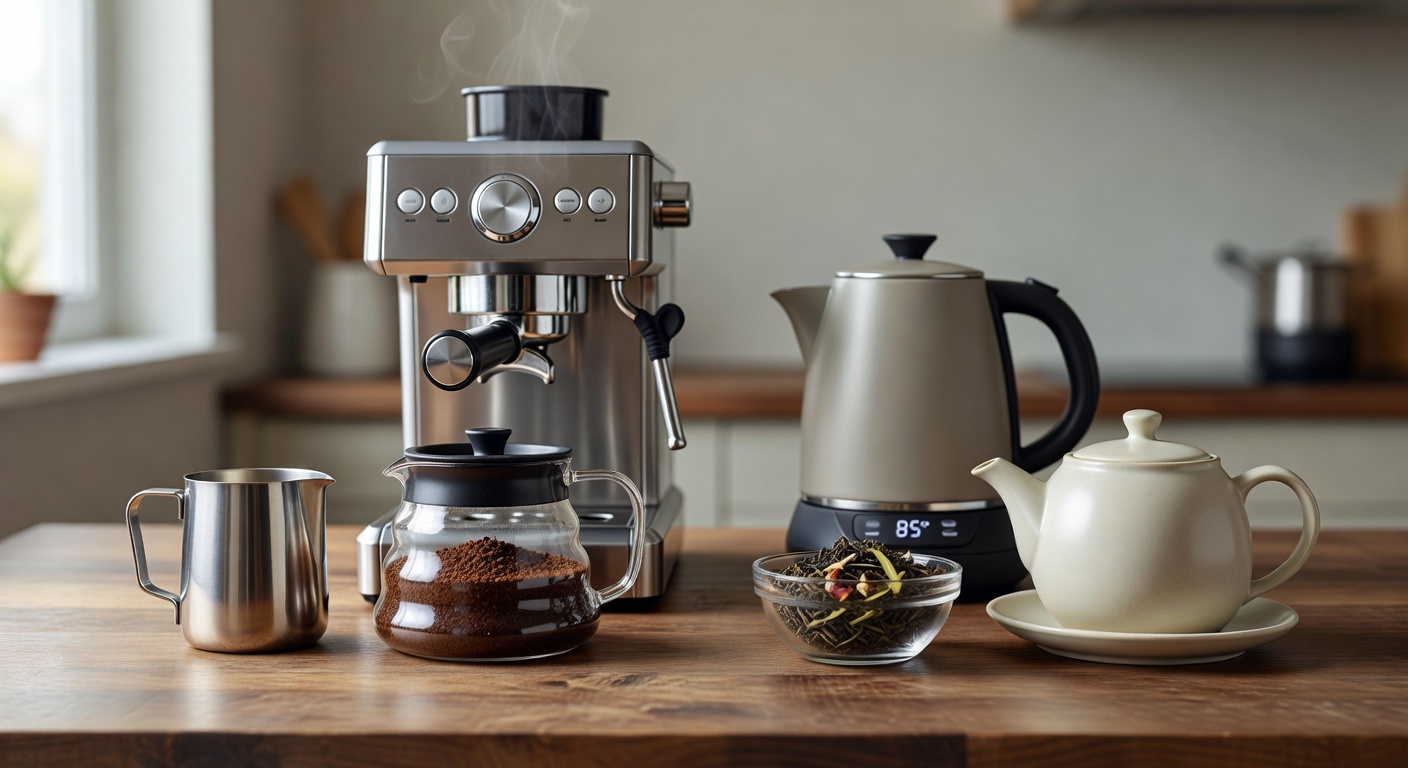
A variable-temperature gooseneck kettle already gives home baristas everything needed to brew oolong, green, or black tea with precision. Set the kettle to the target temperature, use its hold function, and follow a few simple coffee-habits adapted for tea. This approach removes the biggest barrier when switching between coffee and tea and lets you explore both without buying dedicated tea equipment.
Temperature control techniques with coffee equipment
Start by pre-heating your pour-over dripper, carafe, and mug with water just off the boil, then discard it. This stabilizes the brew temperature exactly as you would when dialing in a pour-over coffee.
Use these exact Fahrenheit settings (sourced from standard gongfu and Western tea practices):
- Green tea: 175–185 °F
- Oolong tea: 185–205 °F (lighter oolongs lower, roasted oolongs higher)
- Black tea: 205–212 °F
For oolong, employ a “bloom-style rinse”: pour a quick 5-second flash of hot water over the leaves in your dripper or small teapot, discard, then steep the second infusion as the main brew. The kettle’s temperature-hold function keeps water in the ideal narrow range for the entire session—no guesswork.
In limited home-kitchen experiments with a Tie Guan Yin-style oolong, pre-heating the ceramic V60 dripper and using a gentle spiral pour produced even extraction and noticeably sweeter liquor compared with simply pouring boiling water. The same kettle that controls pour-over coffee at 195–205 °F handles every tea step without compromise.
Practical dual-setup checklist
Most coffee enthusiasts already own the core items for a minimal dual setup. Build on what you have before purchasing anything new.
Must-have items you probably already own:
- Variable-temperature gooseneck kettle
- Pour-over dripper (ceramic or glass works for both coffee and tea)
- Digital scale
- Timer (phone works fine)
- Good filtered water
Recommended low-cost additions (total under $75):
- A small 350–450 ml clay or glass teapot or gaiwan (~$25–35) for gongfu-style sessions
- A pack of reusable tea filters or metal basket infuser (~$10)
- A simple insulated carafe to keep second and third infusions warm (~$15–20)
This combination supports both pour over vs gongfu tea methods and keeps the entire dual setup budget-friendly. For readers focused on coffee or tea for home barista routines, the same kettle and dripper become the bridge that makes daily switching practical and consistent.
For those curious about specific cultivars, see our practical guide on What Is Oolong Tea.
The key takeaway: temperature control is the single variable that most affects both coffee and tea quality. Master it once with equipment you already own, and the decision between coffee or tea each morning becomes about preference rather than logistics.
When Should You Drink Coffee vs Tea Based on Caffeine Timing
The key to enjoying both drinks without sacrificing sleep is simple: treat coffee as your morning rocket and tea as your gentler afternoon companion. Most people process caffeine with a half-life of about 5–6 hours, meaning half the amount you consumed at noon is still circulating in your system by 6 p.m. (Mayo Clinic).
Caffeine timing rules of thumb
Stick to the 200–300 mg daily target supported by the 2024 Journal of Clinical Endocrinology & Metabolism study for most healthy adults. This usually translates to two to three cups of coffee before early afternoon, then switching to tea.
- Drink coffee before 2 p.m. to protect sleep for the majority of people.
- Use tea in the afternoon or early evening because its lower caffeine (48 mg in black tea, 29 mg in green tea per 8 oz) pairs with L-theanine, which promotes calmer focus without the sharp crash.
- Personalize based on how you feel: if tea still keeps you wired at 7 p.m., shift it earlier or choose very light steeps.
Dietitians note that the L-theanine in tea changes the ideal consumption window compared with coffee, creating a smoother energy curve that many find more suitable after midday (TODAY.com, 2026).
Sample daily schedule for dual enthusiasts
A practical rhythm that works for many home baristas looks like this:
| Time | Drink | Reason | Typical Caffeine |
|---|---|---|---|
| 7–9 a.m. | Pour-over coffee | Sharp focus for deep work | 80–100 mg |
| 10–11 a.m. | Light green or oolong | Gentle top-up without jitters | 25–40 mg |
| 3–4 p.m. | Gongfu-style oolong | Ritual + calm energy for late tasks | 30–50 mg |
For night owls who wake at 10 a.m., simply shift the coffee cut-off to 4–5 p.m. Early risers can enjoy a second light tea around 2 p.m. without issue. The goal is protecting the 8–10 hour window before bedtime.
Many baristas who love the ritual of dialing in a pour-over in the morning find that switching to a small gongfu session later prevents the 3 p.m. slump while supporting better sleep. If you already own a variable-temperature gooseneck kettle for coffee, you can use the same tool for both — no new equipment needed.
For readers exploring balanced alternatives, Green Tea Vs Coffee For Skin offers another practical angle on how these drinks complement each other throughout the day.
This approach keeps the enjoyment of both beverages while respecting how caffeine actually works in the body. Experiment conservatively, track how you sleep, and adjust — what matters most is finding the rhythm that fits your own energy and schedule.
Final Recommendation
Neither coffee nor tea is universally superior. The best choice depends on the time of day and the kind of energy or calm you need. A bold morning pour-over delivers the focused lift most home baristas want before 2 pm, while a smooth afternoon oolong or green tea offers gentle alertness without the later crash. After months of deliberate switching in my own kitchen, the clearest takeaway is that a single variable-temperature gooseneck kettle makes it easy to move between both worlds without buying duplicate gear.
Build your dual coffee and tea setup
Start with what you already own. Most home baristas already have the core tools for excellent coffee; only a few modest additions unlock reliable tea results.
Prioritized shopping list
- Variable-temperature gooseneck kettle (already ideal for pour-over and perfect for gongfu or Western tea)
- Small digital scale (shared between coffee and tea)
- 2–3 small gaiwan or teapots (100–150 ml) for gongfu-style sessions
- Fairly priced loose-leaf black, green, and oolong teas
- Optional: bamboo tea tray and strainer set for easier cleanup
This minimal kit keeps total added cost under $80 for most readers while delivering café-quality control at home. Long-term, the cost-per-cup from the earlier comparison table favors tea once the initial equipment is in place—typically half the price of daily specialty coffee when brewing at home.
Pair your rituals intentionally. Use the same morning pour-over routine you already love, then switch to a 3–4 steep gongfu session in the early afternoon when energy naturally dips. The shared kettle removes the friction that stops most people from switching between coffee and tea.
One-sentence decision framework: Drink coffee when you need sharp focus before early afternoon; choose tea when you want calm alertness or an evening wind-down—then use the same temperature-controlled kettle for both.
This dual approach respects the real coffee vs tea differences while giving you practical flexibility. Most home baristas who try it for a few weeks never go back to using only one.
Frequently Asked Questions
Which has more caffeine, coffee or tea?
An 8 oz cup of brewed coffee typically contains 96 mg of caffeine, while black tea has about 48 mg and green tea around 29 mg. This means coffee generally delivers twice the caffeine of black tea. The energy from coffee often feels like a sharper peak, whereas tea provides a smoother lift thanks to L-theanine. These figures come from Mayo Clinic caffeine content data.
Is coffee or tea healthier overall?
Neither is universally healthier — both offer polyphenols and antioxidants linked to better long-term health. Coffee shows stronger evidence for liver protection and metabolic benefits, while tea’s L-theanine supports calmer focus. Recent reviews find comparable longevity benefits when consumed in moderation. For the latest balanced summary, see Harvard Health Publishing’s 2025 overview and TODAY.com dietitian insights.
What equipment do I need to brew both coffee and tea at home?
You can start with the gear you already own. A variable-temperature gooseneck kettle works for both pour-over coffee (195–205 °F) and most teas. Add a simple ceramic teapot or gaiwan for gongfu-style brewing and you’re set. Most home baristas find their existing coffee scale and timer transfer perfectly to tea.
Does tea taste better when brewed with coffee equipment?
Tea can taste excellent when brewed with coffee tools if you control temperature and time. Use your gooseneck kettle to hit the right range (lower for green tea, hotter for black or oolong) and steep for the recommended duration. The main difference is avoiding over-extraction, which coffee gear makes easier once you dial in the numbers.
When is the best time to drink coffee versus tea?
Drink coffee in the morning or before early afternoon when you need focused energy. Switch to tea after 2 pm because its lower caffeine (roughly half that of coffee) is less likely to interfere with sleep. This timing respects caffeine’s 5–6 hour half-life while still letting you enjoy a warm cup later in the day.
Can I use my coffee grinder for tea leaves?
A coffee grinder works for larger-leaf teas if cleaned thoroughly between uses, but it isn’t ideal for delicate green or white teas. For best results, use a dedicated tea grinder or simply tear larger leaves by hand. Most home setups keep the two tools separate to protect flavor.
Which is cheaper per cup, coffee or tea?
High-quality loose-leaf tea is usually more economical per cup than specialty coffee. A single ounce of good tea can yield 15–20 cups, while the same weight of coffee beans produces far fewer servings. Both remain affordable when brewed at home with basic equipment.
Conclusion
The real winner in the coffee vs tea debate isn’t one drink over the other — it’s understanding how your equipment and technique affect the cup in your hand. Whether you’re pulling espresso or steeping oolong, temperature control remains the single most important variable. The comparison table in this guide shows it clearly: small changes in heat, timing, and method dramatically shift caffeine extraction, flavor, and how the drink feels in your body.
Start simple. Your existing gooseneck kettle already gives you everything needed to brew both drinks well. Use the stepped-temperature approach for tea and the steady 195–205 °F range for pour-over coffee, and you’ll immediately taste the difference.
Here’s your practical next step: spend one week deliberately timing your drinks — coffee before 2 pm, tea in the afternoon — and note how your energy feels. Track it for just seven days using the gear you already own.
Neither beverage is universally superior. The best choice depends on the moment. Master the overlap in equipment and technique, and you’ll enjoy great coffee and tea at home every single day.
Ready to upgrade your morning ritual? Explore our guide to the Best Coffee To Buy For Home and start experimenting today.

Leave a Reply