Your espresso machine is only as good as the care you give it. Scale buildup—mineral deposits left behind by water—is the leading cause of machine failure, according to equipment repair specialists, yet it's entirely preventable with a simple monthly maintenance routine. When you neglect espresso machine maintenance, you're not just risking costly repairs; you're also compromising the taste of every shot you pull. A machine clogged with scale produces weak extraction, temperature swings, and that flat, bitter flavor that no amount of fresh beans can fix.
The good news is that keeping your machine in peak condition doesn't require special skills or expensive tools. A few straightforward daily habits—like purging the group head and wiping the steam wand—combined with a focused monthly checklist will extend your machine's life by years and noticeably improve your espresso quality. In this guide, you'll learn the complete home espresso machine care routine, including backflushing techniques, descaling steps for popular Breville models, and water quality best practices that prevent scale from forming in the first place.
Quick Takeaways
- Espresso machine maintenance is the routine care required to keep your equipment clean, properly calibrated, and free from mineral buildup and coffee residue.
- Backflushing is one of the most effective ways to clear coffee oils and fine particles from your group head and brew path—the hidden spaces.
- Descaling removes mineral buildup (limescale) from internal pipes, heating elements, and valves—the leading cause of machine failure according to equipment repair specialists.
Watch: Simple Daily Espresso Machine Care Routine
Credible equipment specialist provides a concise visual demo of the exact daily purge, wipe, and backflush habits recommended in the article, ideal for visual learners and general readers.
What Is Espresso Machine Maintenance and Why It Matters for Home Users
Espresso machine maintenance is the routine care required to keep your equipment clean, properly calibrated, and free from mineral buildup and coffee residue. For home users, it's the difference between pulling consistently delicious shots and watching your machine's performance—and your coffee quality—decline over months of use.
Many home baristas assume that rinsing the group head and emptying the drip tray is enough. In reality, invisible problems accumulate quickly. Scale deposits form inside boilers and pipes, old coffee oils oxidize in the group head, and mineral-laden water gradually clogs internal pathways. The result isn't just a slower machine; it's noticeably worse espresso.
Observable Taste Impacts from Neglected Machines
A poorly maintained espresso machine produces unmistakable flavor problems, even when you're using high-quality beans. Here's what happens:
- Sour or flat shots: When the group head becomes blocked by dried coffee residue and scale, water channels unevenly through the puck. This causes under-extraction and sour, thin-bodied espresso that tastes nothing like the roast profile you paid for.
- Inconsistent pressure and temperature: Mineral buildup inside boilers and group heads disrupts water flow and heat distribution, leading to shots that vary wildly from one pull to the next—a sign your machine needs descaling.
- Off-flavors from old residue: Rancid coffee oils left in the group head and shower screen oxidize over time, adding a stale, bitter taste that masks the sweetness and complexity of fresh espresso.
From a barista training perspective, these problems are immediately recognizable in the cup. A machine that hasn't been backflushed in weeks tastes noticeably different from one maintained weekly, regardless of bean quality.
Real Cost of Skipping Maintenance
The financial case for consistent care is compelling. According to equipment specialists, scale buildup is the primary cause of espresso machine failure, leading to expensive repairs or complete replacement years before the machine's intended lifespan. Regular descaling, backflushing, and water filtration—especially maintaining water hardness in the optimal range of 35–85 ppm—can extend your machine's life significantly and prevent costly service calls.
A home espresso machine that receives monthly maintenance typically outlasts one that doesn't by several years. The cost of descaling powder and cleaning supplies is negligible compared to the price of a new machine or a $300+ repair bill.
| Maintenance Level | Typical Lifespan | Common Failures | Annual Cost |
|---|---|---|---|
| Minimal (rinse only) | 3–5 years | Scale buildup, boiler failure, weak pressure | $200–800 (repairs) |
| Regular (monthly checklist) | 7–10+ years | Rare; mostly wear items | $30–60 (supplies) |
| Neglected (no descaling) | 2–3 years | Multiple system failures | $500+ (replacement) |
Investing 15 minutes a month in proper espresso machine maintenance prevents frustration, preserves flavor, and keeps your equipment running reliably for years. If you're shopping for a new machine, check out our guide to the best espresso coffee machine under $500 to understand what features support easier long-term care.
How to Backflush an Espresso Machine Using Cafiza Tablets
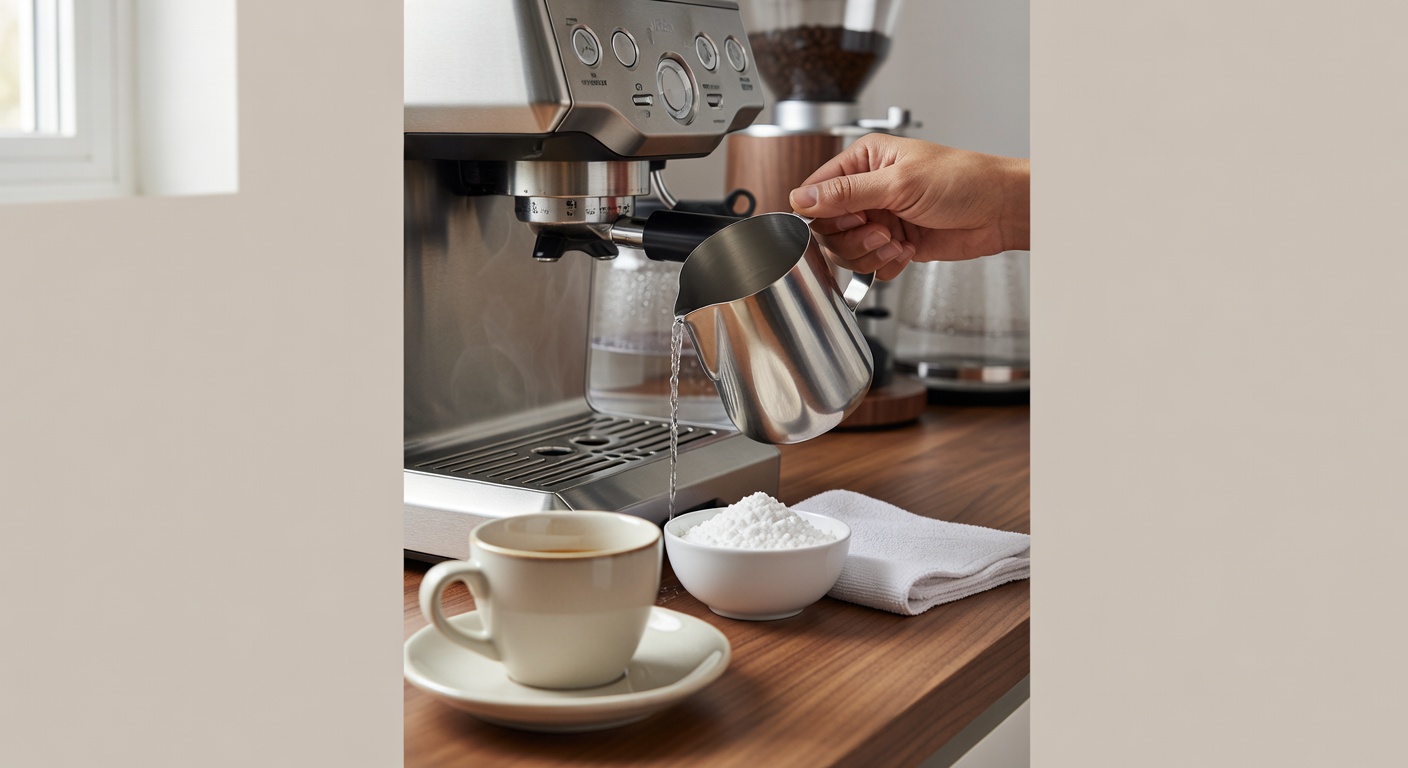
Backflushing is one of the most effective ways to clear coffee oils and fine particles from your group head and brew path—the hidden spaces where scale and buildup accumulate fastest. Unlike a simple rinse, backflushing forces water backward through the group head to dislodge debris that regular extraction can't reach. This step is essential for maintaining consistent flavor and preventing the bitter, ashy notes that signal a clogged group head.
Step-by-Step Backflush Process
What you'll need:
- A blind basket (no holes) for your portafilter
- One Urnex Cafiza tablet
- Your espresso machine manual (critical—not all machines support backflushing)
The process:
1. Insert the blind basket and Cafiza tablet. Lock your portafilter with the blind basket into the group head. Place one Cafiza tablet in the basket. Cafiza is a finely milled powder designed to dissolve and clean without scratching internal components. Follow Urnex's official backflush instructions for your specific machine type.
2. Run the on/off cycle. Activate the brew button for 1–2 seconds, then turn it off. This creates pressure that forces water and Cafiza backward through the group head. Repeat this cycle 5–6 times. You'll see dirty water and foam spray out around the portafilter seal—this is normal and shows the cleaning is working.
3. Rinse thoroughly. Remove the Cafiza tablet and blind basket. Run water through the group head for 10–15 seconds without the portafilter to flush out all detergent residue. Lock in an empty blind basket and backflush with water alone 3–4 more times to ensure no Cafiza remains.
4. Final check. Insert a regular basket with a small amount of coffee and pull a short shot. If it tastes soapy or chemical, rinse longer. The espresso should taste clean and bright.
Group Head Cleaning: Daily vs. Weekly
Daily maintenance keeps your machine running smoothly between deep cleans. After each shot, purge the group head by running water through it for 2–3 seconds without the portafilter. Wipe the shower screen and group head gasket with a damp cloth to remove loose grounds and oils.
Weekly backflushing (or every 4–5 days with heavy use) removes the buildup that daily purging misses. A clogged group head produces weak, sour espresso even when your beans and technique are solid—the water channels become partially blocked, forcing uneven extraction.
Common Mistakes to Avoid
- Skipping the manual check. Not all machines have a three-way solenoid valve that allows safe backflushing. Breville's cleaning and maintenance guide specifies which models support this procedure. Always consult your machine's manual first.
- Using too much Cafiza. One tablet per backflush is enough. Excess powder leaves residue that affects flavor.
- Incomplete rinsing. Soapy espresso is a sign detergent remains in the group head. Rinse longer than you think necessary.
- Ignoring water quality. Hard water accelerates scale buildup, making backflushing less effective over time. Water hardness between 35–85 ppm is ideal for espresso machines, and equipment specialists cite scale as the number-one cause of machine failure.
Backflushing takes five minutes and transforms your espresso's clarity and sweetness. Make it part of your weekly routine, and you'll taste the difference immediately.
How and When to Descale an Espresso Machine, Especially Breville Models
Descaling removes mineral buildup (limescale) from internal pipes, heating elements, and valves—the leading cause of machine failure according to equipment repair specialists. Unlike backflushing, which clears the group head, descaling dissolves minerals that accumulate invisibly inside your machine's plumbing. Skipping this step leads to slower flow, temperature swings, and eventually, costly repairs.
When to Descale Your Espresso Machine
Descaling frequency depends almost entirely on your water hardness. If you live in a hard water area (above 85 ppm), descale monthly. In soft water regions (35–85 ppm), every two to three months is usually sufficient. Water hardness is the single strongest predictor of scale buildup—test yours with an inexpensive water hardness kit from any hardware store or ask your local water utility for a report.
Watch for these warning signs your machine needs descaling sooner:
- Noticeably slower espresso flow despite a properly tamped puck
- Temperature warning lights or steam wand pressure drops
- Gurgling sounds from the heating element
- Weaker espresso extraction even with fresh beans
Breville machines include built-in descale indicators—a light or message that appears when minerals accumulate. Don't ignore it; the machine has detected a real problem.
Safe Descaling Step-by-Step for Breville Machines
Use only a commercial espresso machine descaler (citric acid or vinegar can damage seals and internal components). Breville recommends their own descaling solution, or any product labeled safe for espresso machines.
1. Empty the water tank and fill it with descaler solution mixed according to the product instructions. 2. Activate descale mode on your Breville (consult your manual—most models have a dedicated button or menu option). 3. Run the solution through the group head and steam wand into a large cup or sink. Let it cycle fully; this typically takes 5–10 minutes. 4. Refill the tank with fresh water and run a complete rinse cycle—at least two full tanks—to flush all descaler residue. 5. Run water through the steam wand separately to clear any remaining solution.
Follow your machine's manual exactly; Breville models vary slightly in their descale procedures. Never skip the rinse cycles—leftover descaler will ruin your next shots and potentially corrode internal parts.
Install a water filter or softener if you're in a hard water area. Filtering to 35–85 ppm dramatically extends the time between descales and prevents scale from forming in the first place—far easier than reactive descaling.
Daily, Weekly, and Monthly Home Espresso Machine Care Routine
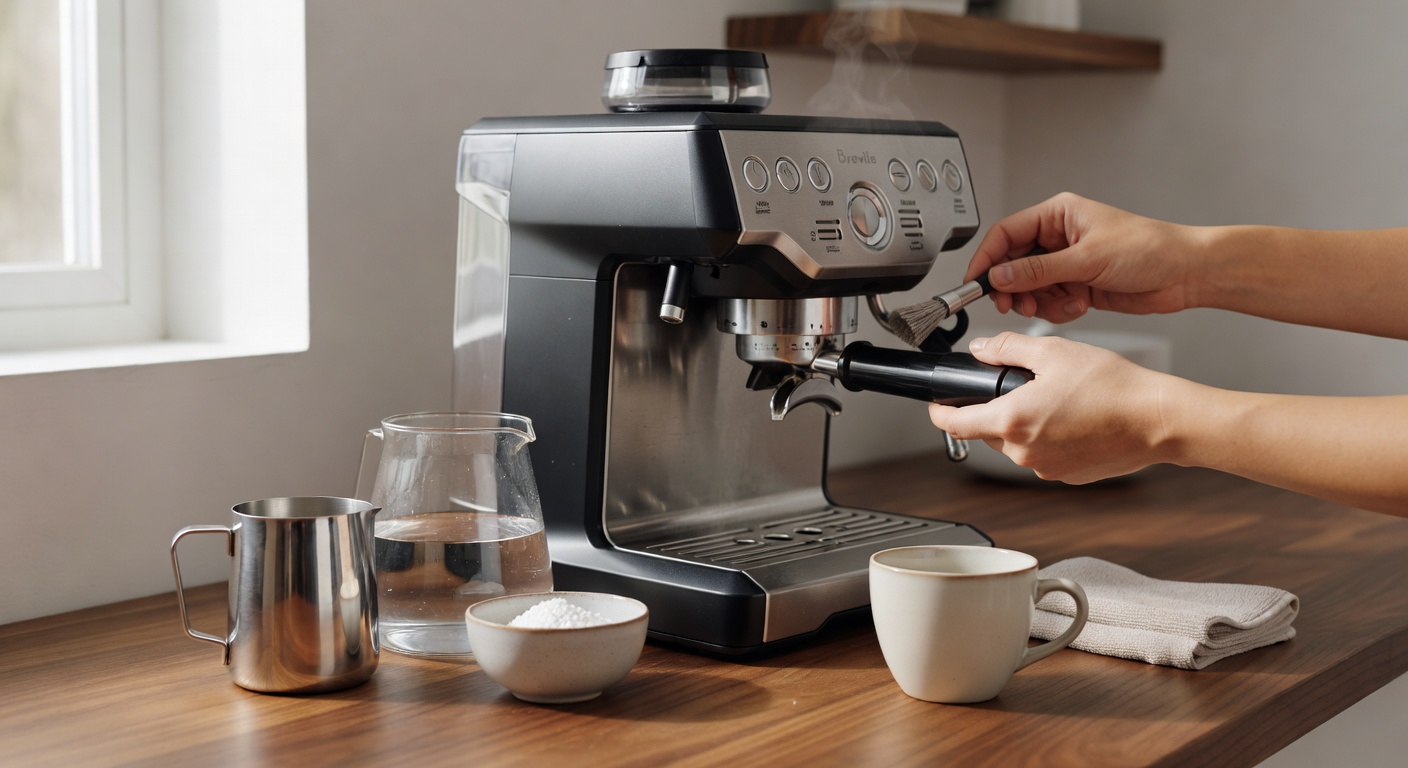
A consistent maintenance rhythm prevents 80% of common espresso machine problems—and most of it takes under five minutes a day. The key is matching your cleaning frequency to how often you brew, your water quality, and the specific demands of your machine.
The complete espresso machine maintenance checklist
Daily (after each use — 2–3 minutes)
- Purge the group head by running water through it without the portafilter attached for 2–3 seconds
- Wipe the group head gasket and shower screen with a clean, damp cloth
- Backflush with water only (no Cafiza) 5–10 times to clear loose grounds
- Empty the drip tray and wipe the shower screen
- Purge the steam wand immediately after steaming milk, then wipe with a damp cloth while still warm
Weekly (1–2 times per week — 5–8 minutes)
- Soak the portafilter and basket in hot water with a small amount of Cafiza for 10–15 minutes, then scrub gently with a soft brush
- Run a full backflush cycle with water only through the group head (10–15 cycles)
- Clean the shower screen thoroughly with a brush to remove any coffee residue buildup
- Check and empty the drip tray; wipe down the exterior
Monthly (once per month — 10–15 minutes)
- Perform a deep backflush using Cafiza tablets or powder (follow the official Urnex instructions for your machine type)
- Remove and soak the shower screen and group head gasket in hot water with Cafiza for 15–20 minutes, then scrub and rinse thoroughly
- Deep clean the steam wand by soaking the tip in hot water with Cafiza, then use a pipe cleaner to clear any milk buildup inside
- Inspect the water filter (if your machine has one) and note when it was last replaced
- Run a descale cycle if your water hardness is above 85 ppm, or every 2–3 months for standard tap water
For Breville-specific models, activate the cleaning cycle mode and follow the manufacturer's prompts for backflushing and descaling to ensure you're using the right pressure and timing.
Visual routine examples and time estimates
The difference between a well-maintained machine and a neglected one shows up in your cup within weeks. A machine that receives only daily purging but skips weekly backflushing will develop sour, thin espresso as coffee oils accumulate in the group head. Add weekly water-only backflushing, and that sourness disappears. Add monthly Cafiza backflushing, and your shots gain clarity and sweetness.
Keep this checklist visible near your machine—print it, screenshot it, or save it to your phone. The routine becomes automatic after two weeks, and the taste improvement makes it worth the small time investment.
Why Water Quality Matters and When to Use a Water Softener
Water is often overlooked in espresso maintenance conversations, yet it's the single most important factor in preventing machine failure. According to equipment specialists, scale buildup caused by hard water is the #1 reason espresso machines require costly repairs. Unlike backflushing or descaling—which are reactive fixes—investing in proper water filtration or softening is preventive maintenance that pays for itself many times over.
Ideal Water Parameters for Espresso Machines
The sweet spot for espresso machine water is 35–85 ppm (parts per million) of total dissolved solids. Water in this range extracts espresso evenly, preserves the machine's internal components, and extends the time between descaling cycles from weeks to months.
Hard tap water—anything above 200 ppm—deposits mineral scale inside the boiler, heating element, and group head. This buildup doesn't just shorten machine life; it also affects taste. Over-mineralized water can produce flat, muted espresso because the minerals interfere with proper extraction. Conversely, water that's too soft (below 35 ppm) can taste thin and fail to extract the full flavor from your beans.
Testing your water is the first step. Many municipal water authorities publish hardness data online, or you can purchase an inexpensive TDS meter (around $15–25) to measure your tap water at home. If your water reads above 100 ppm, filtration or softening becomes essential.
Choosing and Using a Water Softener or Filter
Three main options exist for home users:
Cartridge filters (Brita-style pitchers or under-sink systems) are the most affordable entry point, costing $30–80 upfront. They reduce chlorine and some minerals but don't fully soften water. Replace cartridges every 2–3 months depending on usage.
Dedicated water softeners (ion-exchange or reverse osmosis systems) cost $200–600 installed but deliver consistently soft water and require less frequent maintenance. Breville machines, for example, work best with a water filter to extend descale intervals.
Bottled water is convenient but expensive long-term and generates waste. If you choose this route, select water labeled as "purified" or "distilled" rather than mineral water.
The cost-benefit math is clear: a $50 filter cartridge that lasts three months prevents the need for descaling every two weeks and avoids a $300+ repair bill down the line. Prevention always costs less than repair.
Final Recommendation
Your 30-Day Action Plan
Start with water quality as your first priority. In Week 1, test your tap water hardness using an inexpensive TDS meter (under $20) and install a water filter or softener if your reading exceeds 85 ppm. According to equipment specialists, scale is the #1 cause of espresso machine failure, so this single change prevents more damage than any other maintenance step.
Once filtration is in place, commit to the daily routine: purge the group head, wipe the portafilter, and empty the drip tray. These take under two minutes and catch problems early. Add a weekly backflush with Cafiza tablets and a monthly deep clean of the shower screen and gasket. If your water hardness sits between 35–85 ppm, descale every 3–6 months; harder water requires descaling monthly.
Track your espresso's taste as you go. You'll notice brighter acidity, cleaner sweetness, and more consistent crema within the first two weeks of consistent maintenance. That sensory feedback is your best motivator to keep the habit alive.
Long-Term Machine Care Mindset
Maintenance isn't a chore—it's part of the ritual. Spending five minutes a day on your machine is the same investment you make in selecting good beans or dialing in your grind. It compounds into years of reliable, delicious espresso.
Know when to call a professional. If your machine won't hold pressure, leaks water from the group, or produces espresso that tastes burnt no matter your technique, internal seals or pump components may need replacement. Breville offers official service guides and support for their models, and independent technicians can service most machines affordably.
Build the habit now, and your machine will reward you with years of consistent performance. Start this week with water testing—everything else follows naturally from there.
Frequently Asked Questions
How often should I backflush my espresso machine?
Backflushing should happen daily as part of your routine maintenance, especially after pulling shots. According to Cafiza's official guidance, backflushing removes coffee oils and debris from the brew path before they harden and restrict water flow. If you use your machine multiple times a day, backflushing between sessions keeps the group head clear and helps maintain consistent extraction.
What water hardness level is best for espresso machines?
Water with a total dissolved solids (TDS) level between 35–85 ppm is ideal for both flavor and machine longevity. Water harder than this range causes scale buildup, which is the leading cause of espresso machine failure according to equipment specialists. If your tap water tests above 85 ppm, using a water softener or filtered water will dramatically extend your machine's lifespan and improve shot quality.
Can I use vinegar instead of descaling solution?
Vinegar is not recommended for espresso machines because it can damage internal seals and leave residue that affects flavor. Commercial descaling solutions like those recommended by Breville are formulated to dissolve scale safely without harming machine components. Stick to manufacturer-approved descalers and follow the descale cycle instructions specific to your model.
How do I know if my espresso machine needs descaling?
Signs include slower water flow through the group head, longer brew times than usual, or visible white/brown mineral deposits inside the water tank or on the shower screen. Descaling frequency depends on your water hardness and usage—machines in hard water areas may need descaling every 2–4 weeks, while softer water areas might go 2–3 months. If you're unsure, test your water hardness with an inexpensive TDS meter to establish a baseline schedule.
What's the difference between backflushing and descaling?
Backflushing removes fresh coffee oils and fine grounds from the group head and brew path using water and a cleaning tablet like Cafiza. Descaling dissolves mineral scale that has built up inside the boiler and internal lines over time. Both are essential: backflushing is a frequent preventive step (daily), while descaling is a deeper clean performed less often (every 2–12 weeks depending on water quality).
Should I clean the steam wand after every use?
Yes—the steam wand should be wiped and purged immediately after steaming milk. Dried milk inside the wand can harbor bacteria and affect future milk quality. Run water through the wand for a few seconds, then wipe the exterior with a damp cloth. Once weekly, soak the wand tip in hot water with a cleaning solution to clear any internal buildup.
How long does a typical monthly maintenance routine take?
A complete monthly check—including backflushing, group head inspection, steam wand deep clean, and filter basket examination—takes about 10–15 minutes if you're already doing daily maintenance. Since daily care takes under 5 minutes, spreading tasks across the month keeps your machine in top condition without overwhelming time commitment.
Keep Your Espresso Machine Running Strong
Your espresso machine is only as good as the care you give it. The monthly checklist we've covered—backflushing, descaling on schedule, and monitoring water quality—isn't complicated, but it's the difference between a machine that tastes great for years and one that fails prematurely.
The real win comes from consistency. Daily rinsing and weekly deep cleans take minutes, yet they prevent the scale and oil buildup that sabotage flavor and damage internal components. When you pair these habits with water in the recommended 35–85 ppm range, you've eliminated the #1 cause of machine failure before it starts.
Start this month. Print or bookmark your monthly checklist, set a phone reminder for descale day, and commit to the five-minute daily routine. You'll notice sharper espresso, fewer repairs, and the confidence that comes from knowing your machine is protected.
Ready to upgrade your setup? Explore our guide to the Best Espresso Coffee Machine Under $500 to find a machine worth maintaining.

Leave a Reply