
To brew a remarkably clean, sweet cup with the Chemex, you need the right ratio, grind size, and staged pouring technique. This chemex brewing guide walks you through every visual step so you can consistently avoid the bitter or weak results that frustrate many home brewers.
The Chemex rewards attention to detail. Its thick paper filter and elegant glass design produce a refined, tea-like coffee that highlights the bright, delicate notes in your beans. Yet without proper filter preparation, water temperature, or pour timing, even premium beans can taste flat or overly extracted.
In this practical, visual guide you’ll discover adjusted ratios for light, medium, and dark roasts, exactly how to fold and rinse the filter, the staged pouring method used by specialty roasters, a simple brewing checklist, and troubleshooting tips for common problems. Follow along with the photos and you’ll have a repeatable method that delivers café-quality pour-over at home every time.
Quick Takeaways
- The Chemex is an iconic hourglass-shaped pour-over coffee maker invented in 1941 by German chemist Peter Schlumbohm.
- A reliable Chemex brewing setup doesn’t need to be complicated.
- The sweet spot for most people brewing with a Chemex is a 1:16 coffee-to-water ratio by weight.
Watch: Stumptown Barista Chemex Brewing Demonstration
Professional baristas demonstrate precise pouring technique, filter placement, and timing in a clear, step-by-step format that visually reinforces the written guide for general readers.
What is a Chemex and Why Does It Produce Such a Clean Cup
The Chemex is an iconic hourglass-shaped pour-over coffee maker invented in 1941 by German chemist Peter Schlumbohm. Its simple, elegant design combines laboratory glassware aesthetics with practical brewing performance, delivering one of the cleanest cups possible in home brewing.
The thick bonded paper filter and distinctive shape work together to strip away oils and sediment that other methods leave behind. This produces a bright, tea-like clarity that highlights delicate tasting notes often masked in other brewers.
How the Chemex filter differs from other methods
The Chemex uses a proprietary thicker paper filter than most pour-over devices. According to the official manufacturer guidance, this bonded filter traps far more oils and fine particles than the thinner filters used in a V60 or Kalita (How to Brew with CHEMEX).
Key differences:
- Chemex filter: Thicker bonded paper removes most oils and sediment
- V60 or Kalita: Thinner filters allow more body and oils through
- French press: Metal mesh lets through oils, sediment, and fines
The result is a brighter acidity and refined flavor that many describe as “tea-like.” This clarity lets origin characteristics and nuanced tasting notes stand out more clearly.
When the Chemex shines (and when it doesn’t)
The Chemex performs best with light and medium roasts where its clean profile can showcase floral, fruity, and bright characteristics. Many specialty roasters, including Stumptown and Blue Bottle, specifically recommend it for these roast levels in their brewing guides.
It is less ideal for very dark roasts or espresso blends. These coffees often rely on the body and sweetness that oils provide — qualities the Chemex filter largely removes. In those cases, a French press or immersion method usually delivers more balanced results.
For readers exploring single-origin coffees, pairing the right beans with a Chemex makes a noticeable difference. See our guide to Best Coffee Beans For Chemex for practical recommendations that complement this brewer’s strengths.
A simple side-by-side comparison often reveals the difference: a Chemex cup typically shows brighter acidity and cleaner finish than coffee from a standard drip machine, which leaves more sediment and muted flavors in the cup. This real-world contrast helps explain why the Chemex remains a favorite among home baristas seeking purity of flavor.
What Equipment and Tools Do I Need to Get Started
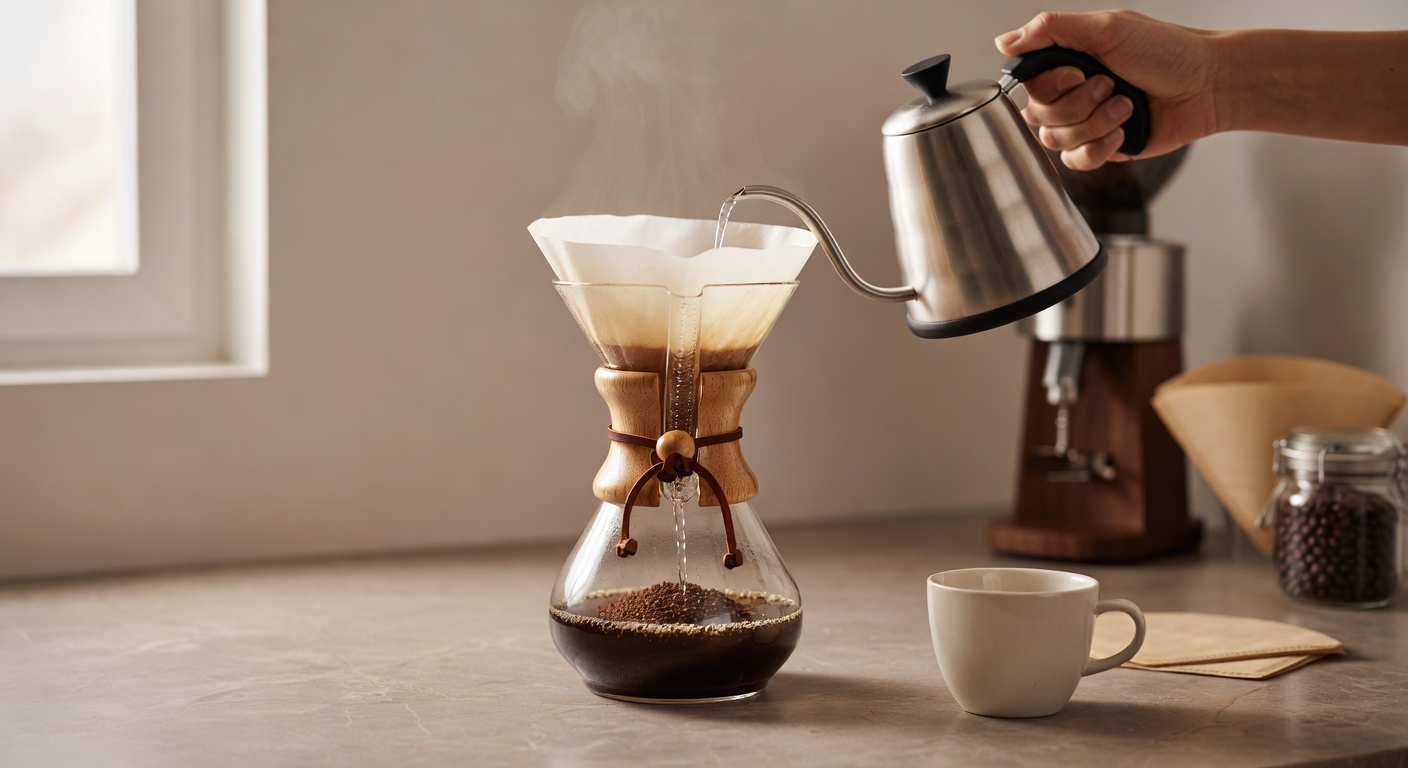
A reliable Chemex brewing setup doesn’t need to be complicated. With just six core items you can consistently brew a clean, balanced cup at home. Here’s exactly what to gather before you start learning how to brew with Chemex.
Must-have tools explained
- Chemex coffeemaker (6-cup or 8-cup model is ideal for most households)
- Chemex bonded filters
- Burr grinder
- Gooseneck kettle
- Digital scale (0.1g precision)
- Timer
A burr grinder and scale are non-negotiable for consistency. Blade grinders produce uneven particles that lead to bitter or weak extraction. A scale removes guesswork—according to Stumptown Coffee’s brew guide, they recommend 42g of coffee to approximately 700g of water, a ratio that delivers repeatable results every time (Stumptown Chemex Brew Guide).
The gooseneck kettle gives you control over pour speed and placement, while the bonded filters trap oils and sediment for the signature Chemex clarity.
Water quality and bean freshness best practices
Use filtered water heated between 195–205°F (91–96°C). Blue Bottle and Stumptown both emphasise this temperature range for optimal extraction without scorching the grounds (Blue Bottle Chemex Guide).
Freshness matters just as much. Choose beans roasted within the last 30 days and grind them right before brewing. Stale beans lose volatile compounds and cannot deliver the bright, nuanced cup the Chemex is known for.
Nice-to-have upgrades
- Insulated carafe to keep coffee hot longer
- Dedicated coffee storage canister
- Pour-over station mat for easy cleanup
If budget is tight, a simple stovetop kettle works as a temporary alternative, but you’ll still want the scale and burr grinder for good results. For bean recommendations suited to this method, see our guide to Best Coffee Beans For Chemex.
Quick Chemex brewing checklist
- Fresh beans (roasted <30 days)
- Filtered water
- Burr grinder set to medium-coarse
- Scale and timer ready
- Filter properly seated and rinsed
Getting these basics right eliminates most common Chemex brewing mistakes before you even pour the first drop.
What Is the Ideal Chemex Coffee Ratio and Grind Size
The sweet spot for most people brewing with a Chemex is a 1:16 coffee-to-water ratio by weight. This means 30 g of coffee for 480 g of water when making a standard 2-cup batch. This ratio delivers balanced flavor without bitterness or weakness and serves as an easy starting point for beginners.
Chemex Coffee Ratio by Bean Type and Strength
Adjust the ratio based on roast level to highlight the best qualities in each bean:
- Light roast: Use 1:15 to 1:17. These beans benefit from slightly more coffee to bring out delicate floral and citrus notes.
- Medium roast: Stick with 1:16. This is the most forgiving and widely recommended balance.
- Dark roast: Try 1:14. The richer, bolder beans can handle a stronger ratio without becoming overly bitter.
According to Stumptown Coffee’s brew guide, their house recipe uses approximately 42 g of coffee to 700 g of water (roughly 1:16.7), which aligns closely with the medium-roast recommendation above (Stumptown Chemex Brew Guide). Blue Bottle also confirms water temperature between 200–210°F (93–99°C) works best across these ratios (Blue Bottle Chemex Guide).
Use this quick reference table for common batch sizes:
| Cups | Coffee (g) | Water (g) | Ratio |
|---|---|---|---|
| 2 | 30 | 480 | 1:16 |
| 4 | 55 | 880 | 1:16 |
| 6 | 80 | 1,280 | 1:16 |
If the coffee tastes too strong, simply add a little more hot water after brewing rather than changing the grind or time. This keeps extraction consistent while adjusting strength to personal preference.
Grind Size and Why It Matters
For how to brew with Chemex, aim for a medium-coarse grind that looks and feels like coarse sea salt. The particles should be visibly uneven but mostly uniform — never powdery.
Grind size directly controls how fast water passes through the thick Chemex filter. Too fine and the brew slows dramatically, pulling out bitter compounds and making the coffee taste dry. Too coarse and water rushes through, resulting in a weak, sour cup that lacks body.
A burr grinder gives the most consistent results. If using pre-ground coffee, choose one labeled “coarse” or “French press” and expect to tweak your ratio slightly. For the best flavor, grind right before brewing and choose beans suited to pour-over — see our guide to Best Coffee Beans For Chemex.
Getting both the chemex coffee ratio and grind size right is one of the simplest ways to improve every batch. Once these two variables feel natural, the rest of the chemex brewing step by step process becomes far more intuitive.
How Do You Fold, Rinse, and Prepare Chemex Bonded Filters
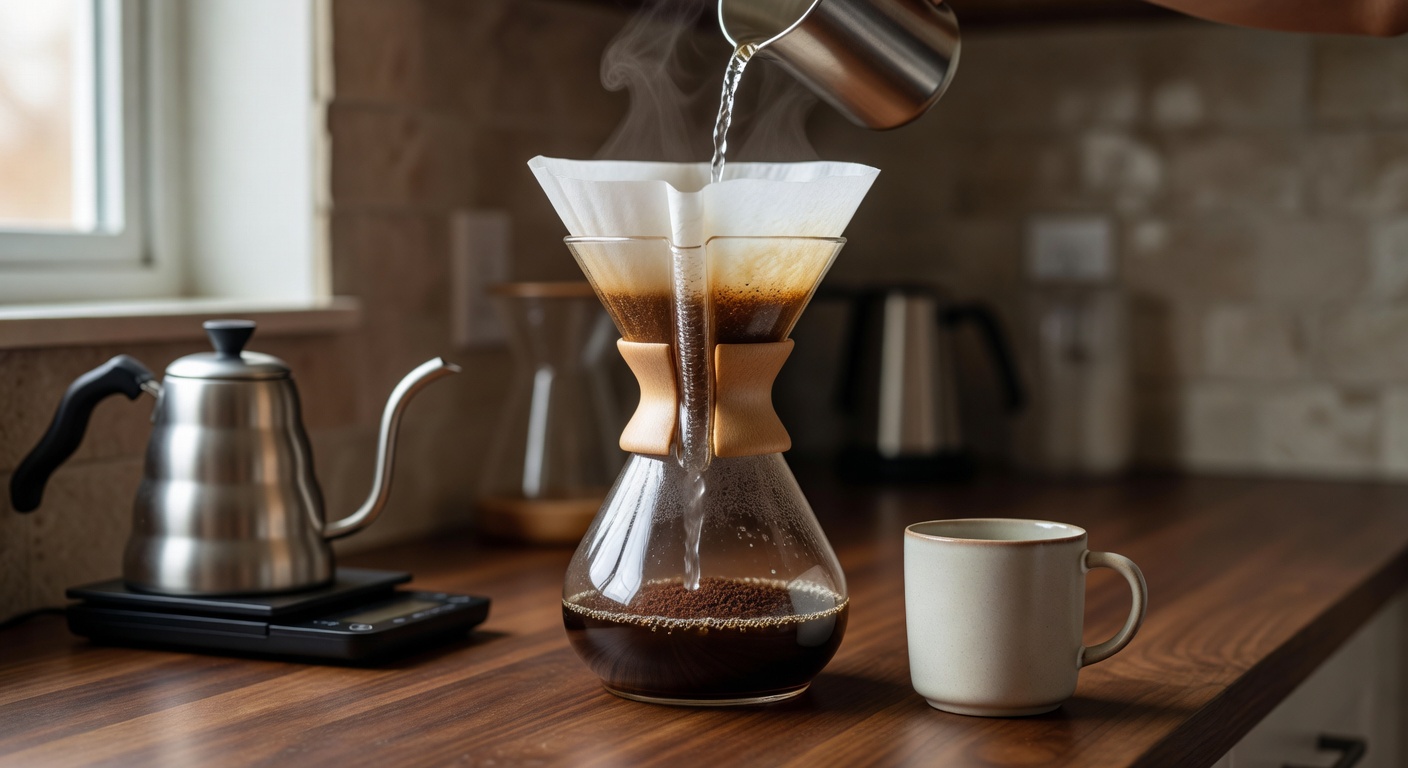
Proper filter preparation is one of the most overlooked steps in how to brew with Chemex. Taking two minutes to fold and rinse the bonded filter removes any paper taste and preheats the brewer so your first pour doesn’t shock the coffee with cold glass.
Step-by-step filter folding and rinsing
The classic three-fold method creates the distinctive Chemex filter shape that fits snugly against the brewer’s spout.
1. Open the filter into a cone and lay it flat with the three-layer side facing you. 2. Fold the filter in half, bringing the curved edges together to form a semicircle. 3. Fold it in half again so the three-layer side now forms a pointed flap on one side. 4. Open the filter into a cone, place it inside the Chemex with the thick three-layer side facing the pouring spout, and press it gently against the walls.
Recommended image alt text: “Step-by-step folding of Chemex bonded filter showing three-fold method with thick side aligned to spout”
Next, rinse thoroughly. According to the official Chemex brewing instructions, you should rinse the filter with hot water from your kettle (around 200–210°F) until the entire paper is saturated and the brewer is warm (How to Brew with CHEMEX). Pour the rinse water out before adding coffee. This step eliminates any residual paper flavor and ensures even extraction from the first pour.
Chemex filter tips for best results
- Use only genuine Chemex bonded filters — unbleached or natural versions are widely available and produce the clean cup the brewer is known for.
- Always rinse with brew-temperature water rather than tap water to avoid thermal shock.
- Check that the filter sits flush against the glass with no large gaps around the edges.
- Never reuse filters; a fresh one for every brew prevents bitterness and flow problems.
These small habits make a noticeable difference in clarity and taste. When the filter is prepared correctly, water flows smoothly through the coffee bed instead of channeling or pooling.
For readers wondering which beans perform best with this method, the right roast can elevate the clean profile even further. See our guide to Best Coffee Beans For Chemex for practical recommendations.
Following these chemex filter tips consistently helps avoid the two most common beginner complaints: papery aftertaste and uneven brewing.
Chemex Brewing Step by Step: Pouring Technique and Bloom Time
The Chemex rewards patience and precision. Follow this sequence and you will consistently brew a clean, bright cup that highlights the best qualities of your beans.
The Complete Visual Brewing Sequence
Start your timer the moment the first drops of water hit the grounds.
- 0:00–0:45 Bloom: Pour 60–80 g of 200–210 °F (93–99 °C) water in gentle circles over the dry grounds. The coffee should rise and bubble as it releases trapped gases. According to Stumptown’s Chemex brew guide, this 30–45 second bloom is critical because it prevents sour, uneven extraction later.
- 1:00–2:30 Main pour: Add water in steady spirals, keeping the slurry about 1–2 cm below the top of the Chemex. Aim for roughly 350–400 g total weight by the 2:30 mark.
- 3:30–4:30 Finish: Top up gently until you reach your target weight (typically 650–700 g for a 42 g dose). Total brew time should land between 4 and 5 minutes. If it runs too fast or too slow, adjust grind size slightly on the next batch.
These timings synthesize consensus advice from the official Chemex brewing instructions, Stumptown, and Blue Bottle’s Chemex guide.
Pouring Technique Explained
The way you pour matters as much as the timing. Keep the kettle spout close to the grounds — about 2–3 cm above the slurry — and move in small, controlled circles.
- Start in the center, spiral outward slowly, then spiral back inward without touching the paper filter walls.
- Maintain a consistent water level so the grounds are always gently agitated but never flooded or starved.
- Pour at a steady speed; rushing creates channels, while hesitation lets the coffee sit too long and turns bitter.
For lighter roasts, slow the pour slightly to extend contact time. Darker roasts often benefit from a faster, more continuous pour to avoid over-extraction. A modest example: when brewing an Ethiopian light roast, extending the bloom to a full 45 seconds and keeping the spirals tight produced noticeably sweeter, more floral notes compared with a rushed pour.
If your brew runs outside the 4–5 minute window, revisit your grind size first before changing the ratio. Small, consistent adjustments lead to reliable results at home.
Quick Chemex Brewing Checklist
- Fresh beans, ground just before brewing
- Filtered water at 200–210 °F
- 30–45 second bloom with visible expansion
- Steady spiral pour, never touching filter sides
- Total brew time 4–5 minutes
Master these steps and most common Chemex brewing mistakes disappear. The technique becomes second nature with just a few practiced batches.
Chemex Brewing Checklist and Common Mistakes to Avoid
A clear checklist keeps every brew consistent, while knowing the most common pitfalls helps you avoid bitter, weak, or papery results. The steps below combine official manufacturer guidance with techniques refined by leading specialty roasters.
Your Chemex Brewing Checklist
Print or screenshot this quick-reference list before your next brew:
- Use a chemex coffee ratio of 42 g coffee to 700 g water (roughly 1:17) as a reliable starting point.
- Grind beans to a medium-coarse consistency resembling sea salt.
- Fold and rinse the bonded filter thoroughly to remove paper taste and preheat the brewer.
- Bloom with 2–3 times the coffee weight in water for 30–45 seconds.
- Pour in slow, steady circles—first in the center, then outward—keeping water 1 cm below the rim.
- Finish the brew in 4–5 minutes total contact time.
- Discard the filter, swirl the carafe, and serve.
Following this sequence produces the clean, bright cup the Chemex is known for.
Chemex Brewing Mistakes and How to Fix Them
Even experienced home brewers encounter these seven issues. Each has a clear cause and straightforward correction.
Bitter coffee usually comes from over-extraction. This happens when the grind is too fine or the total brew time exceeds five minutes. Solution: coarsen the grind slightly and stop pouring once you hit the target weight.
Weak or sour brew results from under-extraction. The water may have channeled through the grounds or the bloom was skipped. Always bloom properly and use a gooseneck kettle for controlled pouring.
Slow drip or stalled brew occurs when the filter clogs. This is often caused by a grind that is too fine or by not rinsing the filter first. Rinse thoroughly and aim for that sea-salt texture.
Paper taste appears when the filter is not rinsed. According to the official Chemex brewing instructions, a quick hot-water rinse removes manufacturing residues and preheats the glass.
Inconsistent strength batch after batch almost always traces back to guessing amounts instead of weighing. A scale removes the guesswork and is recommended by both Stumptown and Blue Bottle.
Temperature problems also affect flavor. Water below 200 °F (93 °C) tastes flat; above 210 °F (99 °C) can scorch lighter roasts. Keep your kettle in the 200–210 °F range.
For readers who enjoy lighter, brighter coffees, choosing beans suited to the Chemex method makes a noticeable difference. See our guide to best coffee beans for Chemex for practical recommendations.
Mastering these points turns occasional success into reliable daily results. Keep the checklist nearby until the process becomes second nature.
Final Recommendation
For most home users, the best place to begin is a 1:16 coffee-to-water ratio using 42 g of medium-coarse coffee and 670–700 g of water just off the boil (200–210 °F). This balanced recipe, drawn from consensus guidance by Stumptown Coffee and Blue Bottle Coffee, delivers the clean, bright cup the Chemex is famous for without requiring advanced adjustments.
My recommended starting recipe
Start with freshly roasted beans ground to the texture of coarse sea salt. Use the official Chemex method for filter folding and rinsing, then follow a 30–45 second bloom followed by gentle, circular pours until you reach the target weight. According to Stumptown’s brew guide, this staged pouring and timing produces consistent extraction and avoids bitterness.
Light to medium roasts shine brightest in a Chemex because the thick bonded filters highlight delicate floral and fruit notes while removing heavy oils.
Scaling up or down for guests
Maintain quality by keeping the same 1:16 ratio and grind size when adjusting batch size. For two people, simply double the dose to 42 g coffee and 670 g water; for four, use 60–65 g and approximately 1,000 g of water. Larger batches may need a slightly coarser grind and a touch more patience during pouring to prevent clogging.
Quick-Start Chemex Parameters
- Ratio: 1:16 (42 g coffee to 670–700 g water)
- Grind: Medium-coarse (sea salt)
- Water temp: 200–210 °F
- Bloom: 30–45 seconds
- Total brew time: 4–5 minutes
Once this baseline feels comfortable, experiment with slightly finer grinds for light roasts or small ratio tweaks. For bean suggestions that pair especially well, see our guide to best coffee beans for Chemex. Consistent water quality and fresh beans remain the two factors that most reliably improve every cup.
Frequently Asked Questions
How long does it take to brew coffee in a Chemex?
A full Chemex brew typically takes 4 to 5 minutes from the first pour to the end of the draw-down. This includes a 30–45 second bloom followed by staged pours. The total time is longer than many pour-over methods because the thick bonded filters slow the flow rate, which contributes to the clean, refined cup. (Source)
What is the best coffee-to-water ratio for a Chemex?
The most widely recommended starting ratio is 1:16 (coffee to water by weight). A common practical recipe uses 42 g of coffee to 700 g of water. Adjust slightly stronger (1:15) for light roasts or milder (1:17) for darker roasts depending on taste preference. (Source) (Source)
What grind size should I use for Chemex brewing?
Use a medium-coarse grind that resembles sea salt. The particles should look visibly chunky and feel gritty between your fingers. Too fine and the brew will take excessively long and taste bitter; too coarse and the coffee will taste weak and sour. A burr grinder provides the most consistent results for this size.
Why do you need to rinse the Chemex filter before brewing?
Rinsing the bonded filter removes the natural paper taste and preheats the glass brewer so the slurry temperature stays stable during brewing. Simply open the filter, place it in the Chemex, and pour hot water through it while discarding the rinse water. This step is considered essential by the manufacturer for best flavor. (Source)
What water temperature is best for Chemex coffee?
The ideal water temperature range is 200–210°F (93–99°C). Water that is too hot can scorch the grounds and create bitterness, while water below 195°F often results in under-extraction and sour flavors. Bring water to a boil and let it sit for about 30 seconds before pouring, or use a temperature-controlled kettle. (Source)
Can you make espresso with a Chemex?
No, a Chemex cannot produce true espresso. Espresso requires pressure of approximately 9 bars to force hot water quickly through finely ground coffee. The Chemex relies on gravity and uses a much coarser grind, resulting in a filtered coffee rather than a concentrated shot. It excels at producing a clean, bright cup but is not a substitute for an espresso machine.
How do you clean a Chemex after brewing?
Rinse the Chemex immediately after use with hot water and a bottle brush or soft sponge. Avoid harsh detergents that can leave residue in the wood collar or glass. The manufacturer recommends occasional deep cleaning with a mild baking-soda solution followed by thorough rinsing. Never put the wooden collar or leather tie in the dishwasher.
Ready to Brew Your Best Cup Yet?
The Chemex rewards attention to a few core principles: a consistent medium-coarse grind, the right coffee-to-water ratio for your roast, careful bloom and pour technique, and — most importantly — fresh beans. Master these and the iconic hourglass shape delivers the clean, bright, refined coffee that has made it a favorite for decades.
Remember, perfect results come from practice rather than perfection. Use the brewing checklist above as your quick reference, adjust slightly for lighter or darker beans, and focus on repeatability.
Grab your Chemex, pick beans suited to pour-over from our Best Coffee Beans For Chemex, and brew your first cup today. Once you taste the difference, you’ll understand why this method remains a home barista staple.
Now it’s your turn — brew a batch using this Chemex brewing guide, tweak one variable next time, and share your results in the comments. Your perfect cup is only a pour away.

Leave a Reply