
Latte art for beginners starts with milk texture, not pattern tricks. Most people skip straight to pouring hearts and rosettas, then quit when their foam looks like scrambled eggs. The real foundation is learning to stretch and roll your milk into glossy microfoam—that's where 80% of the battle lives.
This guide walks you through three beginner-friendly patterns with annotated visuals, hands-on practice drills you can repeat at home, and honest troubleshooting for the steam wands and machines most of us actually own. You'll also get a printable checklist to track your progress and a mistakes table that calls out the equipment errors holding you back. The techniques here draw from established barista resources and are designed for home setups, not café-grade machines.
Ready to stop watching latte art videos and start pouring? Let's build your foundation the right way.
Quick Takeaways
- You don't need a fancy espresso setup to learn latte art.
- Microfoam is the foundation of latte art.
- The heart is the easiest pattern to master first—and for good reason.
Watch: James Hoffmann’s Beginner’s Guide to Latte Art
Trusted coffee educator clearly explains fundamentals like pour height, speed, wiggle technique, and milk texture with visual demonstrations ideal for home learners. Complements written steps without replacing them.
What Equipment Do I Actually Need to Start Latte Art at Home
You don't need a fancy espresso setup to learn latte art. A basic home machine with a steam wand, the right pitcher, and fresh milk are genuinely all you need to start pouring patterns. The rest is practice and understanding how your specific equipment behaves—especially if you're working with a single-boiler machine that requires a bit of timing strategy.
Essential Home Barista Tools
Steam wand. Your espresso machine's steam wand is the foundation. It doesn't need to be a dual-boiler or commercial-grade; even single-boiler machines work fine once you understand their limitations. What matters is that the wand can produce microfoam—that velvety, paint-like milk texture that holds patterns. If your wand has a single hole, you'll need slightly more patience and technique than a multi-hole design, but it's entirely workable.
Stainless steel pitcher (12–20 oz). This is your most important accessory. Stainless steel conducts heat evenly and lets you see milk texture through the side. A 12-ounce pitcher works for single cups; 20 ounces gives you room to practice without cramping your pour. Avoid glass or ceramic—they don't heat milk efficiently and make it harder to judge microfoam consistency.
Thermometer (optional but helpful). A simple milk thermometer ($10–15) removes guesswork when you're starting out. According to detailed steaming guides, milk reaches ideal texture around 150–155°F, and knowing this helps you stop steaming at the right moment. Once your hands learn the pitcher temperature, you can skip it.
Fresh whole milk. Full-fat milk froths more reliably than skim or oat alternatives. If you prefer non-dairy, barista-blend oat or soy milk works, but whole cow's milk is the easiest starting point.
Single-Boiler Machine Tips
Single-boiler machines require you to pull your espresso shot, then immediately steam milk before the boiler cools. This timing constraint is real, but it's not a blocker—it just means you need a workflow.
Temperature surfing basics. After pulling your shot, wait 5–10 seconds before opening the steam wand. This brief pause lets the boiler reheat slightly. Steam for 20–30 seconds to build microfoam, then purge the wand and switch back to brew mode. The machine will reheat for your next shot. It's a rhythm you'll develop quickly.
Pitcher prep matters. Have your pitcher, milk, and espresso cup ready before you pull the shot. Every second counts on a single boiler, so eliminating setup delays keeps your milk at the right temperature for pouring.
What You Need
Before you start practicing, confirm you have the essentials in place:
Essentials
- Espresso machine with functioning steam wand
- Stainless steel pitcher (12–20 oz)
- Fresh whole milk
- Espresso cups or mugs
- quality beginner-friendly coffee beans
Nice to Have
- Thermometer
Once these are sorted, you're ready to move on to milk steaming technique. No expensive upgrades needed—focus your budget on consistent, fresh espresso and milk instead.
Milk Frothing for Beginners: Getting Perfect Microfoam Texture
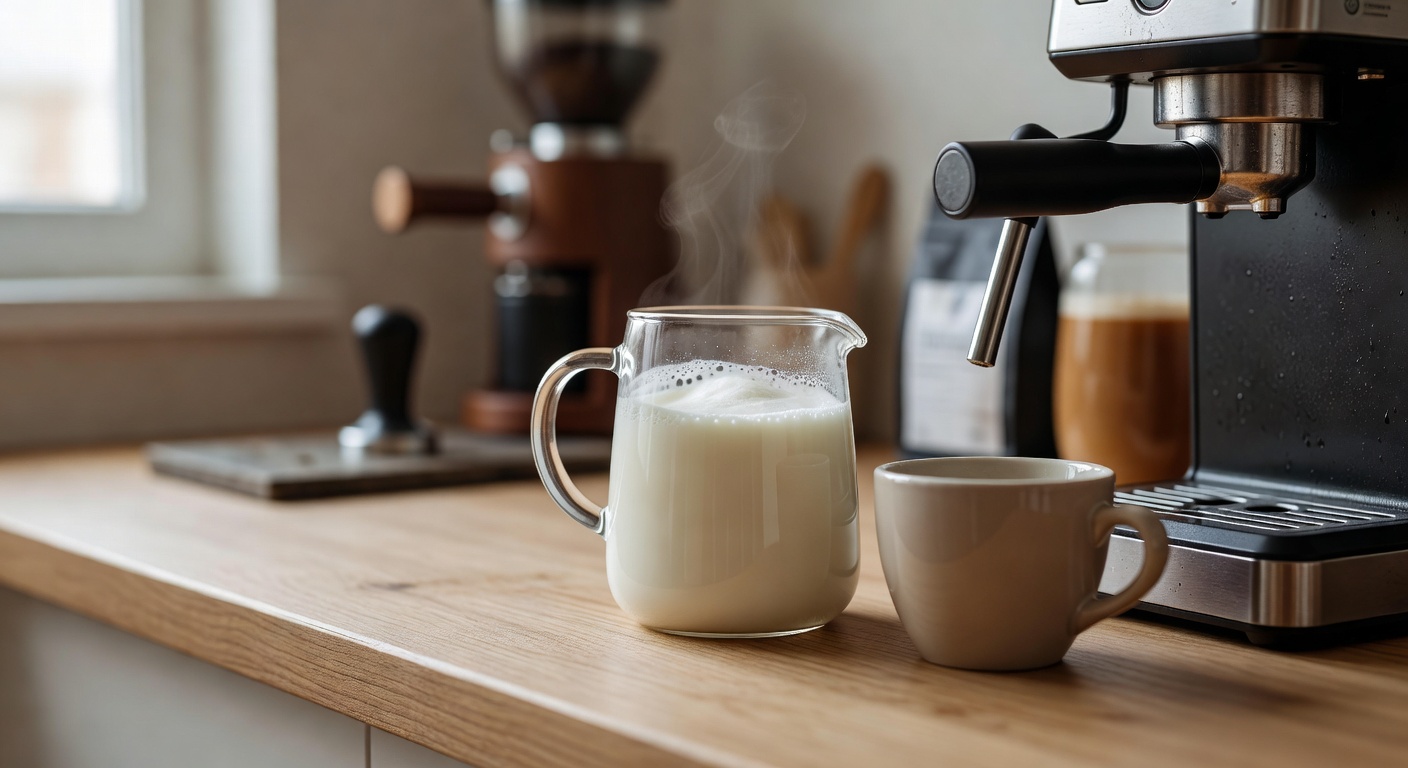
Microfoam is the foundation of latte art. Without the right milk texture, even perfect pouring technique won't create clean patterns. The good news: learning to steam milk is a learnable skill that improves with focused practice, and you don't need expensive equipment to start.
Understanding Microfoam vs Macrofoam
The difference between microfoam and macrofoam comes down to bubble size and how milk behaves when you pour it.
Macrofoam is what you get when you first turn on the steam wand—large, visible bubbles that sit on top of the milk. Microfoam is velvety, dense, and pourable. The bubbles are so small they're almost invisible to the naked eye, and the milk flows like paint rather than breaking apart into separate foam and liquid layers.
Why does texture matter more than volume? Because latte art patterns depend on milk that moves smoothly into espresso. Large bubbles collapse unpredictably, and you lose control mid-pour. Microfoam stays cohesive and lets you create defined lines and shapes.
According to CoffeeScience's detailed guide, the ideal steaming temperature is between 140–155°F (60–68°C). Most home machines reach this range in 20–40 seconds, depending on your pitcher size and steam wand power. Aim for the lower end (around 140°F) when you're learning—cooler milk gives you more time to correct mistakes before it's too hot to handle.
Step-by-Step Milk Steaming Technique
Purge the wand first. Turn on the steam wand for 1–2 seconds without the pitcher attached. This clears any water or old milk inside the wand and ensures you're working with dry steam.
Position the wand correctly. Place the steam wand tip just below the surface of the milk, angled slightly off-center. The wand should be submerged about ¼ inch. This position is crucial: too high and you'll create macrofoam; too deep and you won't incorporate enough air.
The stretching phase (first 5–10 seconds). Keep the wand tip near the surface. You'll hear a sharp hissing sound as air enters the milk. This is where you're creating tiny bubbles. Watch for a small whirlpool forming in the pitcher. Don't move on until the milk temperature reaches about 110°F.
The rolling phase (remaining time). Submerge the wand deeper and position it to create a smooth, rolling motion inside the pitcher. The milk should spin in a tight circle with no splashing. This phase refines the bubbles and heats the milk to your target temperature. Remove the wand when the pitcher becomes too hot to hold comfortably (around 155°F).
Wipe and purge again. Immediately wipe the wand with a damp cloth and purge steam for 1–2 seconds to clear any milk inside.
Texture Practice Drills
You don't need to pour to practice. These drills build muscle memory and help you recognize when your milk is ready.
The spoon test. After steaming, pour a small amount of milk into a cup and dip a spoon into it. Properly textured microfoam should coat the spoon evenly and flow back into the pitcher without separating into foam and liquid layers. If you see distinct foam sitting on top, you need more rolling time.
The pitcher swirl test. Gently swirl the pitcher in a circular motion. Microfoam should move as one cohesive mass. If the milk sloshes or you see large bubbles breaking the surface, the texture isn't fine enough yet.
Home machine troubleshooting. Single-boiler machines and entry-level steam wands often lack power. If your milk isn't heating quickly enough, try using cold milk straight from the fridge—it gives you more time in the stretching phase. If you're struggling to create a whirlpool, angle the pitcher slightly so the wand tip catches the edge of the milk surface more directly. Starbucks At Home's practical guide covers these adjustments for consumer equipment.
Spend 5–10 minutes daily just steaming and testing texture. Once this feels automatic, pouring patterns become much easier to control.
The Step-by-Step Process for a Basic Heart Design
The heart is the easiest pattern to master first—and for good reason. It requires only three core movements: a steady base pour, a controlled wiggle, and a clean pull-through. Once you nail the heart, you'll have the foundational skills to progress toward rosetta and tulip designs.
Heart Latte Art Fundamentals
Start by pouring your espresso into a cup tilted at a 20–30-degree angle. This creates the visual "canvas" for your pattern. According to James Hoffmann's beginner guide, the key is to begin your milk pour from a height of about 1–1.5 inches above the espresso surface. This height allows the milk to integrate fully with the shot rather than sitting on top.
Once the cup is roughly half full, lower your pitcher to about half an inch from the surface—this is where the "wet paint" effect takes over. The microfoam now sits on top of the espresso layer, giving you control to draw the pattern. Pour steadily while moving your pitcher in a side-to-side wiggle motion, roughly 2–3 inches wide. The wiggle creates the characteristic bumps of the heart's top lobe.
After 3–4 wiggles, stop the side motion and pull your pitcher straight back toward you while maintaining your pour. This "cut" separates the heart from the espresso and completes the shape. The entire pour should take 8–12 seconds from start to finish.
Annotated Photo Walkthrough
Image 1: Pitcher Positioning Stainless steel pitcher held at a 45-degree angle, spout positioned 1 inch above the espresso surface, wrist relaxed and steady.
Image 2: Wiggle Phase Pitcher lowered to 0.5 inches, milk stream creating two distinct lobes as the pitcher moves side to side; espresso visible around the edges.
Image 3: Final Pull-Through Pitcher moving straight back while pouring, creating a thin line that separates the heart shape from the darker espresso base.
Heart Pattern Practice Drill
Commit to a simple 10-pour daily drill. Pour five hearts focusing purely on consistency—same height, same wiggle width, same pull speed. Then pour five more, this time aiming for visual clarity: a defined two-lobed top and a sharp point at the bottom.
Success criteria: Your heart should have symmetrical lobes and a clean separation from the espresso. If your lobes are uneven, your wiggle speed or pitcher angle likely shifted mid-pour. If the heart bleeds into the espresso, you pulled through too slowly or your microfoam was too thin.
This drill builds muscle memory without pressure. Most beginners see recognizable hearts within 15–20 pours. Once the heart feels automatic, you're ready to explore the best coffee beans for beginners that showcase your latte art—quality espresso makes your patterns pop visually and taste better too.
How to Pour a Simple Rosetta or Leaf Pattern

Once you've mastered the heart, the rosetta (also called a leaf) is the natural next step. It builds on the same foundational skills—pour height, speed control, and milk flow—but adds a rhythmic wiggle motion that creates multiple petals instead of a single shape. The rosetta is often easier than the heart for beginners because the repetitive motion is more forgiving; small timing mistakes blend into the pattern rather than breaking it.
Rosetta vs Leaf – What's the Difference?
The terms are often used interchangeably, but there's a subtle distinction. A rosetta features a wider base with multiple overlapping petals that taper toward a point, created by a side-to-side wiggle as you pour. A leaf is typically a single, more defined petal shape with cleaner edges, achieved with less wiggle and more deliberate layering.
For beginners, the rosetta is more forgiving because the wiggle motion masks minor inconsistencies in milk texture or pour speed. Both patterns rely on the same core technique: starting high to establish a base layer, then lowering the pitcher to create definition, and finishing with a quick stem pull.
Step-by-Step Rosetta Tutorial
1. Establish your base layer Pour from a higher position (roughly 1–1.5 inches above the espresso surface) with a steady, medium flow. This fills the cup with white milk and creates the foundation for your pattern. According to James Hoffmann's beginner guide, this base layer should take about 2–3 seconds and cover roughly half the cup.
2. Lower and begin the wiggle Lower your pitcher to about half an inch above the surface and reduce your flow slightly. Begin moving the pitcher side to side in a smooth, rhythmic motion—think of drawing a gentle "S" or wave pattern. The wiggle should be steady and even; rushing creates thin petals, while moving too slowly produces a muddy pattern.
3. Layer your petals As you wiggle, the microfoam creates overlapping white lines against the espresso. Each pass of the wiggle creates one petal. Continue this motion for 4–6 petals, depending on cup size. Keep your pour speed consistent; hesitation or acceleration will show as gaps or thick spots in the pattern.
4. Execute the stem pull When you've created enough petals, raise your pitcher slightly and pull it toward you in one swift motion. This "cuts" through the petals and creates the stem line that defines the rosetta. The stem should be clean and centered; if it's wobbly, your hand moved too slowly or your milk flow was uneven.
Common home equipment note: If your steam wand produces lower pressure or thinner microfoam than commercial machines, your petals may appear less defined. Compensate by wiggling slightly slower and maintaining a lower pour height to maximize contrast between milk and espresso.
Printable Practice Templates
Download our free rosetta practice template (PDF) featuring five outlined rosetta patterns at different scales. Trace the petal shapes and stem lines to build muscle memory for the wiggle motion and timing before you pour into an actual cup. The template includes a beginner checklist: consistent petal width, centered stem, and smooth transitions between petals.
Practice 5–10 rosettas with water and food coloring in a white cup before moving to real espresso and milk. This removes the pressure of "wasting" coffee while you refine your rhythm and pour height.
Most Common Latte Art for Beginners Mistakes and How to Fix Them
Even with solid equipment and technique, small errors derail your pour. The good news: most mistakes are fixable once you know what's going wrong. Below, I've mapped the symptoms you'll actually encounter at home, what causes them, and practical fixes tailored to consumer steam wands and single-boiler machines.
Common Milk Texture Mistakes
Too many large bubbles (wet foam)
This happens when your steam wand sits too high in the pitcher or you're introducing air for too long. Large bubbles won't hold a pattern—they collapse mid-pour. Lower your wand so the tip is just barely submerged, and stop the aeration phase (the loud hissing sound) as soon as you hear it. You should spend most of your steaming time rolling the milk, not aerating.
Milk that's too thin or watery
If your microfoam feels thin and separates quickly, you've either stopped steaming too early or your wand is clogged with dried milk. Check that steam pressure is building smoothly—if it's weak, run a purge cycle and clean the wand tip with a damp cloth. Aim to steam until the pitcher is too hot to hold comfortably (around 150–155°F according to CoffeeScience's steaming guide), then stop immediately.
Milk separating or breaking during the pour
This usually means your microfoam is unstable—either too old (more than 30 seconds since steaming), too hot, or lacking enough emulsified air. Always pour within 10–15 seconds of finishing the steam. If you're using a single-boiler machine, let the group head cool slightly before pulling your next shot so the milk doesn't overheat.
Pouring Technique Errors
Pouring too high or too low
Height matters more than most beginners realize. James Hoffmann's beginner guide emphasizes starting 4–6 inches above the cup and lowering as the cup fills. Too high and the milk splashes and breaks apart; too low and you lose control. Practice the motion slowly without milk first—muscle memory helps more than you'd think.
Bad timing (pattern appears too late or too early)
If your heart or leaf looks messy, you're likely starting the pattern before the cup is full enough or waiting too long. The pattern should emerge naturally as the cup reaches about three-quarters full. Watch the espresso-to-milk ratio in the cup, not just the clock.
Shaky hands or jerky movements
Tension kills precision. Rest your pouring arm on the edge of the espresso machine or counter to stabilize it. A steady, slow wiggle beats a fast, wobbly one every time. If you're nervous, pull a practice shot and pour it down the sink first—one free rehearsal can calm your hands.
Latte Art Mistakes Table (Quick Reference)
| Symptom | Cause | Home Fix | Prevention |
|---|---|---|---|
| Pattern won't hold; milk spreads everywhere | Microfoam too wet or too old | Pour within 10–15 seconds; lower steam wand tip deeper into pitcher | Aerate for 2–3 seconds only; steam immediately before pouring |
| Espresso and milk don't blend; pattern floats on top | Pouring too high or too fast | Lower cup closer to wand; slow your pour speed | Start 4–6 inches up; lower as cup fills |
| Pattern looks blurry or undefined | Milk texture is inconsistent (lumpy) | Tap pitcher on counter to pop large bubbles; re-steam if necessary | Roll milk continuously during steaming; avoid aeration phase |
| Cup overflows or milk splashes | Pouring too aggressively or cup too full | Use a smaller cup; pour at half-speed | Fill espresso only halfway; pour milk more gently |
| No pattern appears at all | Milk too thin or espresso too dark/bitter | Check steam pressure; taste the espresso | Choose fresh, beginner-friendly beans; clean steam wand daily |
The most honest advice: expect 5–10 failed pours before a clean pattern emerges. That's normal. Each mistake teaches you something about milk texture, timing, or hand position. Keep a notebook of what went wrong and what you changed—you'll spot patterns faster than guessing.
Final Recommendation
Your 30-Day Latte Art Practice Plan
The fastest way to build muscle memory is to follow a structured progression rather than jumping between patterns randomly. Here's a realistic roadmap:
Week 1–2: Texture mastery Focus entirely on steaming milk. Practice until you can produce consistent microfoam without pouring it into espresso—just steam and discard. Aim for 3–4 practice sessions per week. This foundation matters more than any pattern.
Week 3: Heart basics Once your milk texture is reliable, pour 5–10 hearts per session. Don't worry about symmetry yet; focus on pour height, speed, and timing as James Hoffmann outlines. Expect messy results—that's normal.
Week 4: Rosetta or leaf Move to the wiggle motion once hearts feel less chaotic. Practice the four foundational skills—dot, wiggle, cut, and stack—which underpin nearly every pattern you'll encounter.
Track your best pour each week. You'll notice improvement faster than you expect.
Next Steps After Mastering Heart and Rosetta
Once you're consistently pouring recognizable hearts and rosettas, you're ready to explore tulips, swans, and more intricate designs. At this point, join a home-barista community—Reddit's r/espresso or local coffee forums offer real feedback and troubleshooting from people using the same equipment you are.
Consider upgrading your coffee beans if you haven't already. Better espresso makes pouring easier and more rewarding; thin or over-extracted shots fight against your milk texture, no matter how good your technique is.
Most importantly, remember that latte art is a skill, not a requirement for good coffee. The real goal is understanding how milk behaves and how to control it. Everything else—the patterns, the speed, the pour height—flows from that foundation. Keep practicing, stay patient with yourself, and enjoy the process.
Frequently Asked Questions
How long does it take to learn latte art?
Most people can create a recognizable heart or basic leaf pattern within 2–4 weeks of consistent practice, typically 15–20 minutes per session. Progress depends on milk steaming skill first—if your microfoam texture isn't right, pouring technique alone won't produce clean patterns. The structured 4-week practice plan outlined in this guide prioritizes texture drills before pattern work, which accelerates results for home baristas.
Can I practice latte art without an espresso machine?
Not effectively. Latte art requires a steam wand to create microfoam and an espresso shot pulled at the moment of pouring—both are essential to the technique. While you can practice pouring motions with water and food coloring, you won't develop the real-world feel for milk temperature, flow, and timing that transfers to actual espresso drinks. If you're serious about learning, a basic espresso machine with a steam wand is the minimum investment.
What type of milk froths best for latte art?
Whole milk froths most reliably and produces the silky microfoam texture ideal for latte art patterns. The fat content in whole milk creates stable, fine bubbles that hold their shape during pouring. Skim milk can work but produces larger, less stable bubbles; plant-based milks vary widely by brand and require experimentation. For beginners, whole milk removes one variable and lets you focus on steaming technique and pouring.
Why does my latte art look blurry or muddy?
Blurry patterns usually indicate one of three issues: microfoam texture is too coarse (bubbles too large), espresso crema is too thick or old, or you're pouring from too high. According to Prima Coffee's pouring guide, pour height directly affects pattern definition—start low (about 1 inch) and adjust upward only as needed. Check your steaming technique first; most beginner issues trace back to milk texture rather than pouring speed.
Is latte art just for decoration, or does it indicate something about the drink?
Latte art is primarily visual, but the technique behind it—proper microfoam and controlled pouring—does improve the overall texture and mouthfeel of the drink. Clean, well-defined patterns require the right milk temperature and bubble size, which also create a smoother, more integrated espresso-milk blend. So while the design itself is decorative, the skill that produces it genuinely enhances the coffee experience.
Do I need special milk pitchers or steam wands to start?
A basic stainless steel pitcher (12–20 oz) and the steam wand that came with your espresso machine are sufficient to begin. Specialty pitchers with spouts designed for latte art can help, but they're not essential—many home baristas create clean patterns with standard equipment. Focus on mastering milk texture and pouring fundamentals first; upgrading equipment becomes worthwhile only after you've developed consistent technique.
What's the difference between a heart and a rosetta pattern?
A heart is the foundational pattern—you pour a solid dot, then cut through it to create the shape. A rosetta (or leaf) builds on that foundation by adding a wiggling motion as you pour, creating multiple leaf-like segments in one continuous line. According to CoffeeScience's beginner guide, the rosetta requires the same pour height and speed control as a heart but adds a rhythmic side-to-side movement. Master the heart first; the rosetta becomes natural once that motion is automatic.
Start Your Latte Art Journey Today
Here's what matters most: latte art is fundamentally about milk texture. Get your microfoam right—velvety, glossy, and pourable—and the patterns follow naturally. The pouring technique matters, but it's secondary to that foundation.
The path forward is simple: practice consistently. Short daily drills beat occasional marathon sessions. Spend 10 minutes working through the heart and rosetta patterns using the templates and checklist from this guide. Focus on milk steaming first, then add pouring once your texture is solid.
Download the free practice checklist and printable templates included in this article. Use them to track your progress and stay accountable to the fundamentals.
If you're still building your home setup, start with Best Coffee Beans For Beginners to ensure you're working with quality espresso. Good beans make a real difference in how your milk and patterns look.
Your first clean heart or leaf is closer than you think. Grab your pitcher, steam some milk, and pour. The only barrier between you and latte art for beginners is practice.


Leave a Reply